



1. The God's-Eye View
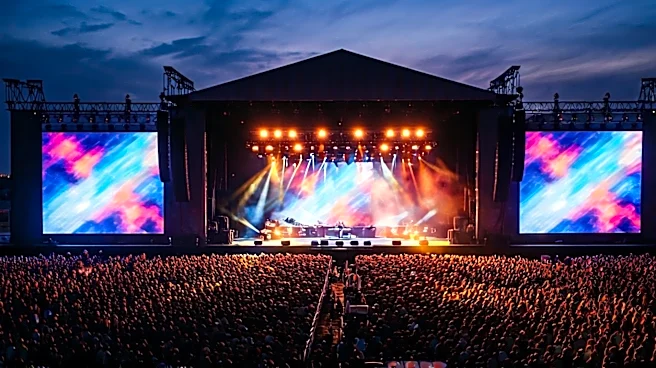
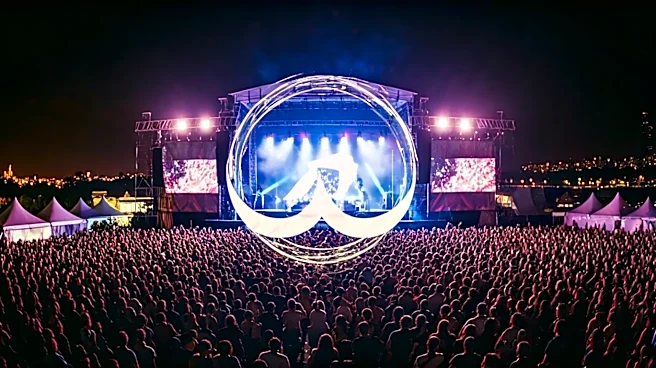
That breathtaking shot soaring over 50,000 screaming fans, swooping down toward the stage? That’s the work of a jib or a spider-cam. These crane-like camera systems are essential for establishing scale. By showing the sheer size of the venue and the sea
of humanity within it, the director immediately tells the home viewer: this is a massive event. It frames the artist not just as a singer on a stage, but as the focal point of a huge cultural gathering. These sweeping, fluid movements create a sense of grandeur that a static camera could never capture, making the performance feel like the center of the universe.
2. The Intimate Stage-Walk
While the jib shot creates scale, the Steadicam creates intimacy. This is the camera operator who seems to glide effortlessly across the stage, weaving between band members and circling the star. The Steadicam’s magic is its ability to put you, the viewer, right on stage. When an artist like Luke Combs or Lainey Wilson struts down the catwalk, the Steadicam follows, matching their energy step for step. This trick closes the physical and emotional distance between the performer and the audience at home, making a stadium-sized performance feel as personal as a front-row seat.
3. The Engineered Crowd Reaction
Those shots of fans singing along, hands in the air, overcome with emotion? They’re not random. Directors have cameras dedicated to capturing the crowd, and they know exactly when to cut to them. During a powerful chorus or a heartfelt bridge, cutting away to a fan who is visibly moved reinforces the song's emotional impact. It tells the viewer, "This moment is special, and everyone here feels it." This technique turns tens of thousands of individuals into a single, unified character: the adoring fan base. It validates the performance's power and creates a sense of shared experience for everyone watching at home.
4. The Compressed Perspective
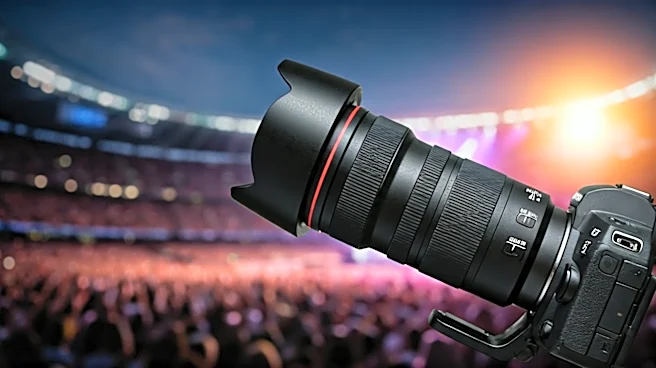
One of the most subtle but powerful tricks involves lens choice. By using a long-focal-length lens and positioning the camera far away from the stage, directors can create an effect called lens compression. This visually flattens the depth of the image, making the background appear much closer to the subject than it actually is. On the CMA Fest stage, this means the massive crowd of fans behind the artist looks like a dense, towering wall of energy, not a distant sea of dots. It makes the artist appear to be completely enveloped by their audience, amplifying the connection and making the entire scene feel more packed and dynamic.
5. The Rhythm of the Edit
A performance's energy isn't just created on stage; it's manufactured in the control room. The pace of the editing is meticulously matched to the music. For a high-octane anthem, the director will use rapid-fire cuts—jumping from a wide shot to a close-up on a guitar solo, to a fan’s face, to a drum fill, all within seconds. This visual rhythm injects adrenaline into the performance. Conversely, for a slow, emotional ballad, the cuts become longer and smoother. The camera might linger on the artist’s face, allowing their expression to tell the story. This editing isn't just for show; it's a form of visual choreography that guides the viewer's emotional response.
6. The Illusion of Spontaneity
The greatest trick of all is making it all look unplanned. In reality, these performances are blocked and rehearsed with the camera team. The artist knows which camera to look at for a key moment, where to stand for the perfect lighting, and when the Steadicam will be making its move. This collaboration ensures that the production captures every high-kick, guitar toss, and knowing glance. The goal isn't to make it feel robotic, but to ensure that the technological elements serve the performance seamlessly, creating what feels like a spontaneous, magical moment that was, in fact, planned to perfection.