



Sam Levy
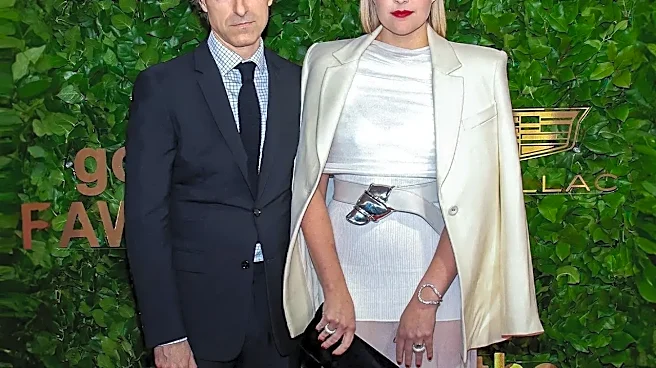
You can't discuss the Baumbach aesthetic without Sam Levy. As the cinematographer for 'Frances Ha' and 'Mistress America', Levy helped define the director's modern visual signature. For 'Frances Ha', he and Baumbach shot in black-and-white on a Canon
5D Mark II, a choice that gave the film a timeless, French New Wave energy that feels both nostalgic and immediate. Their work is a masterclass in capturing the beauty and loneliness of city life, using shallow focus to isolate characters against their urban backdrop. Levy, who also shot Greta Gerwig's directorial debut 'Lady Bird', has a knack for making digital filmmaking feel as rich and textured as film.
Robbie Ryan
If Sam Levy is about crisp, kinetic energy, Robbie Ryan brings a warmer, softer, and more emotional grain to Baumbach's work. Their collaborations on 'The Meyerowitz Stories (New and Selected)' and 'Marriage Story' are studies in lived-in naturalism. Ryan, who often shoots on 16mm film, has a philosophy of finding beauty in imperfection and letting the environment dictate the light. This approach gives his films a documentary-like honesty. Whether he’s working with Baumbach, Yorgos Lanthimos on the surreal 'Poor Things', or Andrea Arnold on the raw 'American Honey', Ryan’s camera is always empathetic, moving with a fluid, observant grace that prioritizes character over everything.
Sean Price Williams
For those who appreciate the New York indie spirit of Baumbach's work but crave something a bit more chaotic, Sean Price Williams is your guy. Known for his collaborations with Alex Ross Perry ('Listen Up Philip') and the Safdie Brothers ('Good Time'), Williams is a master of capturing grit and anxiety. His style is often defined by grainy 16mm film, fluid handheld camerawork, and a raw, sometimes 'imperfect' exposure that feels utterly real. While Baumbach’s characters are navigating intellectual and emotional crises, Williams’ subjects are often in a state of physical and existential panic. It’s the same focus on character psychology, just amplified to a fever pitch.
Hélène Louvart
A prolific French cinematographer, Hélène Louvart's work shares Baumbach's deep interest in the inner lives of her characters, particularly women. Her filmography includes collaborations with Alice Rohrwacher ('Happy as Lazzaro') and Eliza Hittman ('Never Rarely Sometimes Always'). Louvart’s style is patient, observational, and profoundly human. She excels at capturing the subtle textures of faces and environments, using natural light to create a feeling of unvarnished truth. Her work on 'The Lost Daughter' is a perfect example, creating a visual atmosphere of sun-drenched psychological tension. For fans who connect with the emotional vulnerability in Baumbach's films, exploring Louvart's extensive and celebrated career is a must.
Christopher Blauvelt
Christopher Blauvelt shares a key mentor with Sam Levy: the legendary Harris Savides, who shot Baumbach's 'Greenberg'. You can see that influence in Blauvelt's work, especially in his collaborations with director Kelly Reichardt ('First Cow', 'Showing Up'). Blauvelt specializes in a quiet, patient naturalism, creating images that are deeply connected to their physical environment. His frames are often composed like paintings, but they never feel static or stuffy. There's a profound sense of place and a focus on small, telling details that echo the way Baumbach uses New York or Los Angeles as more than just a backdrop. Following Blauvelt means appreciating the art of subtle, landscape-driven storytelling.