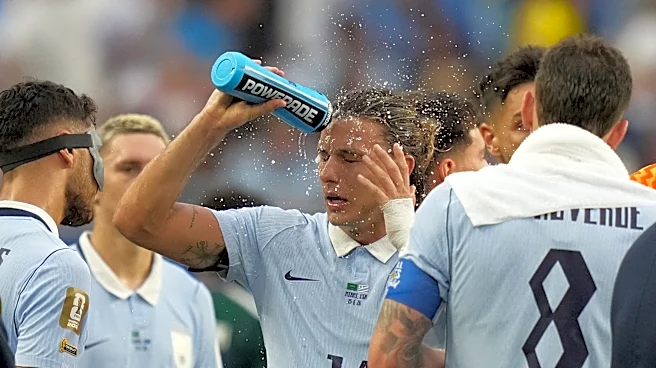










The Body Under Siege
Imagine running a 10k, but with intermittent, explosive sprints, physical collisions, and the need to make split-second decisions. Now do it on a surface radiating heat in 90-degree weather with high humidity. For soccer players, this is the brutal reality
of a summer tournament. The primary enemy is dehydration. Losing just 2% of body weight through sweat—a common occurrence in a 90-minute match—can significantly impair performance. Muscles cramp, reaction times slow, and passing accuracy plummets. More dangerously, the core body temperature rises, increasing the risk of heat exhaustion or even life-threatening heatstroke. The body is forced to work overtime, not just to play the game, but simply to cool itself down, diverting blood flow to the skin and away from the muscles that need it most. Every sprint becomes more costly, and every recovery takes longer.
Slowing Down the Beautiful Game
The tactical blueprint for many modern, successful teams is built on energy: high-pressing, constant movement, and rapid counter-attacks. Heat renders that strategy almost suicidal. Coaches of teams like Germany or Liverpool, known for their lung-busting “Gegenpressing,” must fundamentally alter their approach. In extreme heat, possession becomes a defensive tool. Teams will slow the tempo, passing the ball laterally in their own half not just to probe for an opening, but to conserve precious energy. You’ll see fewer overlapping runs from full-backs and less high-intensity chasing of defenders. The game can start to look “boring” or “slow” to the casual viewer, but it’s a necessary adaptation. The team that manages its energy reserves most effectively often gains a decisive advantage in the final 20 minutes, when their over-exerted opponents have nothing left in the tank.
Mandatory Breaks and Medical Oversight
Governing bodies like FIFA are not blind to this challenge. In response to player welfare concerns, especially after the hot and humid conditions of the 2014 World Cup in Brazil, official “cooling breaks” were formalized. These are not just informal water breaks. Based on a pre-game reading of the Wet Bulb Globe Temperature (WBGT)—a measure that accounts for temperature, humidity, wind, and solar radiation—a referee can mandate a three-minute break in each half. Typically triggered when the WBGT exceeds 89.6°F (32°C), these stoppages allow players to flock to the sidelines for water, electrolyte drinks, and ice-cold towels. It’s a crucial intervention that provides a brief respite and helps mitigate the most severe risks, while also creating a tactical timeout for coaches to relay instructions.
The Hydration Arms Race
The battle against heat begins long before kickoff. It’s a scientific, multi-day process. Team nutritionists and doctors implement hyper-hydration protocols, ensuring players are consuming precise amounts of water and electrolyte-rich fluids for 48 hours leading up to a match. Pre-cooling strategies are now common, with players wearing ice vests during their warm-up or in the tunnel to lower their core body temperature before they even step on the pitch. Post-game recovery is just as critical. Ice baths, once seen as a novelty, are standard procedure to reduce muscle inflammation and heat stress. Every player’s weight is measured before and after the game to calculate fluid loss, and a personalized rehydration plan is immediately put into action. In a major tournament, where games come every four or five days, the team that recovers from the heat fastest often wins the war of attrition.