






The Power of Saying Less
In the American sports landscape, we’re used to information overload. An NFL broadcast crams the scorebug with the score, quarter, time left, down and distance, and timeouts remaining. Baseball gives us balls, strikes, outs, and the inning. The soccer
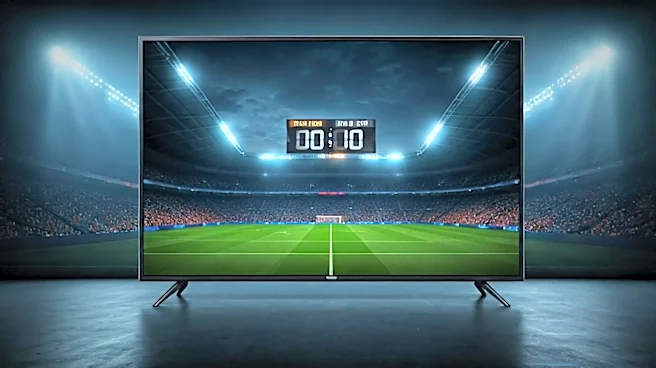
scorebug, by contrast, is an exercise in elegant minimalism. For most of the match, it shows you just three things: the two teams (often just three-letter abbreviations and their flags), the score, and a running clock. That’s it. This isn't a flaw; it’s a deliberate design choice that enhances the viewing experience. By stripping away clutter, the broadcast forces your attention back where it belongs: on the field. The game’s narrative isn’t told through a barrage of statistics but through the fluid motion of the players, the tactical shapes they form, and the physical struggle for control. The scorebug doesn’t distract from the story; it anchors it. It’s a quiet, constant presence that provides the most essential context without pulling focus, trusting the viewer to absorb the drama unfolding in front of them.
A Clock That Breathes Dread
Perhaps the scorebug’s most powerful feature is its clock. Unlike in basketball or American football, the soccer clock doesn’t stop. It marches relentlessly forward, a constant, visible reminder that time is the most precious commodity. When your team is winning 1-0, every minute that ticks by on that bug is a small victory. When you’re trailing, it’s an enemy, mocking your team’s frantic efforts with its steady, indifferent pace. This creates a unique psychological tension. There are no commercial breaks to reset the emotional temperature, no timeouts to stop the bleeding. There’s only the game and the clock. As it creeps past the 80th minute, the scorebug transforms from a piece of information into an emotional engine. Every second it displays feels heavier, more meaningful. And then comes stoppage time—that mysterious number added by the referee, displayed with a “+” sign. The scorebug doesn’t just tell you the time; it makes you *feel* the time, turning 90 minutes into a slow-burn thriller.
Telling a Story with Pixels
For all its minimalism, the scorebug is a dynamic storyteller. A tiny yellow or red card icon appearing next to a team’s name doesn’t just note a foul; it signals a shift in the entire complexion of the match. A team is now vulnerable, a key player is walking a tightrope, or a side is facing an uphill battle with ten players. When a goal is scored, the brief, explosive animation that accompanies the number changing is the broadcast’s primary moment of catharsis. It’s the visual confirmation of the pandemonium you just witnessed. In two-legged knockout ties, a small “AGG” (aggregate score) indicator adds another layer of dense, dramatic information. Suddenly, a 1-0 lead might not be a lead at all. This simple addition re-contextualizes the entire game, forcing viewers to do mental calculus that heightens the stakes. The bug communicates complex scenarios with the bare minimum of visual real estate, making every fan an amateur tactician.
The Ultimate Dramatic Shift
Everything changes when a knockout game goes to a penalty shootout. At this point, the scorebug ceases to be a background element and becomes the absolute center of the universe. The clock vanishes. The scoreline freezes. The bug expands to include a new, terrifying graphic: a row of five circles for each team. This is the penalty tracker. As each player steps up to the spot, the entire broadcast—and every fan watching—is focused on that corner of the screen. A successful penalty fills a circle with color (usually green). A miss fills it with a different color (red or grey) or leaves it empty. It’s a brutally simple, binary representation of glory and failure. With each kick, the visual balance of those circles shifts, providing an immediate, gut-wrenching summary of which team has the advantage. In these moments, the players are just actors; the scorebug is the stage, and its simple, colored dots are writing history in real time.