


A Festival That Worships the Auteur
First, you have to understand what Venice is—and what it isn't. Unlike other festivals that might prioritize market trends or star-studded commercial packages, the Venice Film Festival has cultivated a reputation for being a director's festival. It’s
a place where the auteur—the filmmaker as the primary author of the work—is king. The long take is, in many ways, the ultimate auteur signature. It’s a bold, directorial flourish that announces a supreme confidence in one’s vision. By choosing not to cut, a director forces the audience to live inside their world, on their terms, creating an unbroken reality that is both immersive and technically dazzling. Festival director Alberto Barbera has consistently programmed films that showcase a singular, powerful vision. It’s a philosophy that creates a natural home for directors who think in scenes, not just shots, and who have the ambition to execute them.
The Power of Pure Cinema
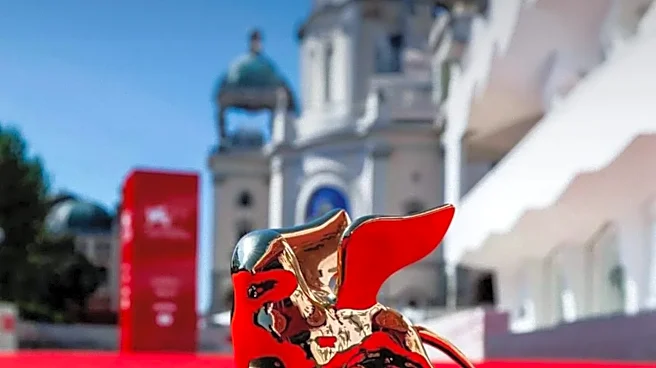
The long take isn’t just a technical flex; it’s a storytelling tool of immense power. By refusing to cut away, a filmmaker can build unbearable tension, deepen a character's emotional state, or fully immerse the audience in a specific time and place. Think of the stunning opening of Alfonso Cuarón’s “Gravity,” which premiered at Venice in 2013. The film’s celebrated 13-minute opening shot doesn’t just establish the setting of space; it creates a terrifying, real-time sense of vulnerability and isolation. Similarly, Cuarón’s “Roma,” which won the festival's top prize, the Golden Lion, in 2018, uses long, sweeping takes to build a rich, detailed portrait of family life in 1970s Mexico City. In a long take, the background becomes as important as the foreground, allowing viewers to absorb the world in its entirety. Venice, with its grand screening rooms and cinephile audience, provides the ideal environment for this kind of deep, attentive viewing.
An Antidote to the Algorithm
In the current media landscape, content is often designed to be bite-sized and instantly gratifying. Streaming platforms and social media favor speed, brevity, and hooks that grab you in the first three seconds. The long take is the philosophical opposite of this. It demands patience. It requires you to surrender to the filmmaker's rhythm and trust that the journey will be worthwhile. By consistently championing films that employ this technique, Venice makes a powerful statement. It positions itself as a curator of art, not just content. It champions cinema that is meant to be experienced in a dark room, on a big screen, without the option to skip ahead. This makes the festival a crucial counterpoint to the algorithmic culture that increasingly dictates what we watch. It’s a declaration that some stories need time to unfold, and that a single, unbroken shot can be more thrilling than a thousand quick cuts.
The Launchpad for Awards Season
There’s also a practical, strategic reason. The Venice Film Festival, held in late August and early September, is perfectly timed to kick off the fall awards season. A critically acclaimed premiere on the Lido can generate immediate and powerful Oscar buzz that carries a film through the rest of the year. Films like “Gravity” and “Roma” didn't just wow critics at Venice; they went on to major Academy Award success. A show-stopping long take is exactly the kind of memorable, virtuosic filmmaking that gets awards voters talking. It’s a craft element that is both immediately impressive and artistically defensible. For directors looking to make a splash and establish their film as a serious contender, unveiling a masterful long-take sequence at Venice is a proven strategy for capturing the industry’s attention and starting the long road to Oscar night on the strongest possible footing.