







The Unwritten Rules of Summer Movies
Historically, the third week of July was hallowed ground for a specific type of film. Think superheroes, explosive action sequels, and easy-to-digest comedies. It was the commercial heart of the summer movie season, a time when studios unleashed their
most reliable, four-quadrant crowd-pleasers to dominate the box office. The strategy was built on a simple assumption: with schools out and temperatures soaring, audiences craved air-conditioned fun, not homework. Films like 'Independence Day' or 'Terminator 2: Judgment Day' defined the playbook for the Fourth of July corridor. This was not the time for complex narratives, somber themes, or challenging art. That was what the fall and winter awards season was for. For years, the calendar was a predictable machine, with light, frothy blockbusters in the summer and serious 'prestige pictures' in the fall. A studio would never dream of dropping its big Oscar contender in the middle of July.
The 'Oppenheimer' Anomaly
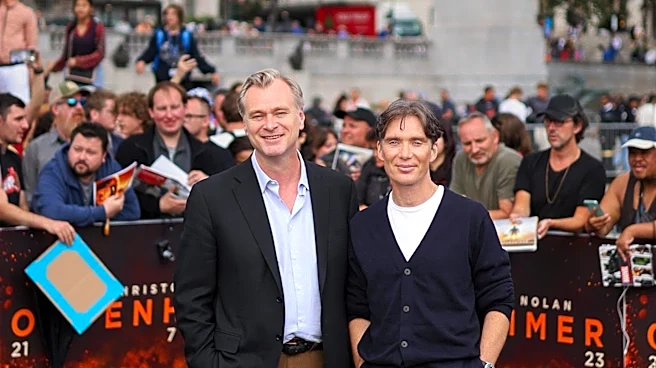
Then came July 2023. Universal Pictures and director Christopher Nolan released 'Oppenheimer,' a three-hour, R-rated biographical thriller about the father of the atomic bomb. On paper, it was the anti-summer blockbuster: dense, talky, and morally complex. Yet, it became a global phenomenon, earning nearly $1 billion and sweeping the Academy Awards. Its release alongside 'Barbie' created the 'Barbenheimer' cultural event, a perfect storm that proved audiences were starved for more than just the usual franchise fare. Suddenly, the idea that summer audiences only wanted mindless fun seemed outdated. 'Oppenheimer' didn't just succeed in spite of its July release; it succeeded because of it. It had the entire summer to build word-of-mouth and dominate the cultural conversation, riding a wave of buzz all the way to Oscar night. It wasn't an anomaly; it was a proof of concept.
Enter 'The Odyssey': A Blockbuster With Brains
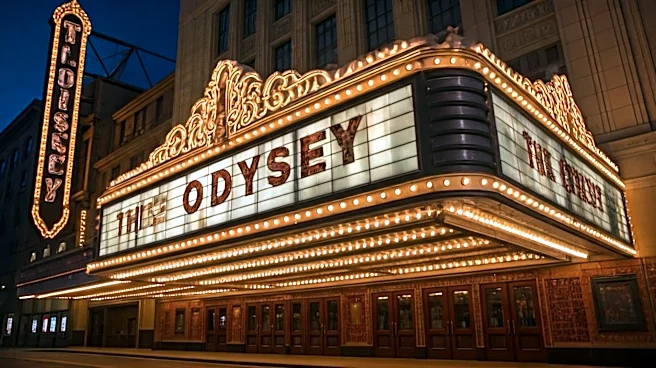
Now, Nolan and Universal are doubling down. On July 17, 2026, they will release 'The Odyssey,' a sweeping adaptation of Homer's epic poem. Starring Matt Damon as Odysseus and a star-studded cast, the film is described as a 'mythic action epic' shot entirely with IMAX cameras, a format Nolan champions. This is the quintessential 'prestige-blockbuster'—a film with the immense scale, budget, and marketing muscle of a summer tentpole, but with the literary pedigree and artistic ambition of an awards-season heavyweight. By planting his flag in the same mid-July weekend he conquered with 'Oppenheimer,' Nolan is making a statement. He's betting that intellectually curious, adult-driven storytelling can become a staple of the summer season, not just a one-off curiosity.
Why Mid-July Is the New Frontier
The logic is surprisingly sound. Releasing a major artistic statement in July offers several advantages. First, it avoids the glut of Oscar-bait films that flood theaters between October and December, where even great films can get lost in the shuffle. Second, it commands the public's attention with minimal competition for serious-minded cinema, allowing it to become an 'event' for adults. And third, it guarantees access to premium large format screens, like IMAX, for an extended, highly profitable run—a key negotiating point for a filmmaker like Nolan. Rather than being a disadvantage, the summer release date acts as a launchpad, giving a film like 'The Odyssey' months to build its legacy. It can be a commercial juggernaut first and an awards contender second, dominating two separate news cycles.