




The Skeleton of the Silhouette
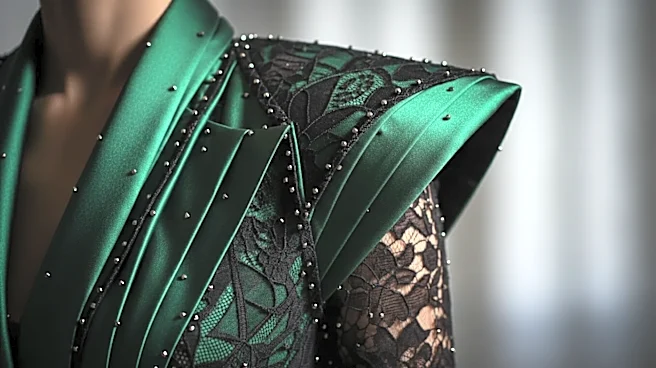
Think of the shoulder as the coat hanger for the entire garment. In tailoring, its placement and construction dictate how the rest of the fabric falls, drapes, and moves with the body. A perfectly executed shoulder provides the foundational structure
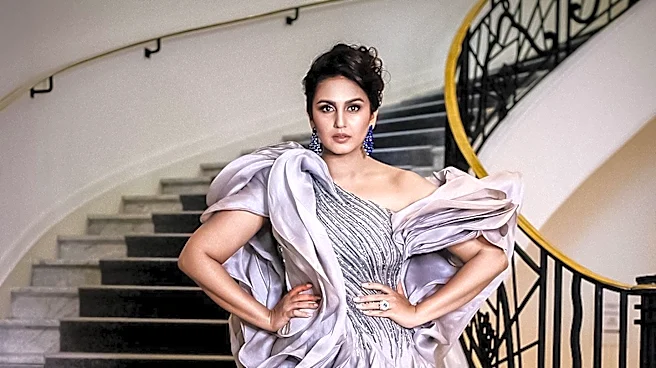
for the entire silhouette, whether it’s a sharply tailored blazer or a flowing gown. When critics examine a shoulder, they’re looking for technical mastery. Is the seam flawlessly set? Does the line extend, drop, or curve with intention? This single area reveals a designer’s understanding of anatomy, pattern-making, and construction. A weak or poorly considered shoulder can make even the most luxurious fabrics look clumsy, while a strong one can elevate a simple design to an object of architectural beauty. It is, in essence, the silent anchor of the entire look.
A Brief History of Power
The shoulder line has always been a powerful social signifier. Its modern fashion story began in the 1930s with Elsa Schiaparelli, who used padding to create a broader, more assertive silhouette that challenged the softer lines of the previous decade. This look gained momentum during World War II, as women entered the workforce and adopted more utilitarian, militaristic styles. But it was the 1980s that cemented the shoulder as a symbol of female empowerment. Designers like Thierry Mugler and Claude Montana built empires on exaggerated, formidable shoulders that became synonymous with “power dressing.” These weren’t just clothes; they were armor for women carving out space in male-dominated boardrooms. This history is ingrained in the fashion consciousness, and every new shoulder iteration is read against this legacy of strength and subversion.
The Modern Couture Shoulder
Today, designers are still using the shoulder to push boundaries. At Balenciaga, Demna Gvasalia has used 3-D printing and innovative pattern cutting to create futuristic, squared-off shoulders that feel both architectural and alien. His work often plays with exaggerated proportions, creating silhouettes that challenge traditional ideas of the body. Meanwhile, at Schiaparelli, Daniel Roseberry has continued the house's surrealist legacy with inventive shoulder treatments, from jackets with kinetic latex tentacles to designs that are deliberately exaggerated as a nod to the brand's founder. These modern interpretations show that the shoulder is still a primary site for experimentation. For critics, a designer's ability to innovate here—to create a shoulder that feels new and relevant—is a key indicator of their overall vision and creative daring.
What the Critics Really See
When a fashion critic zeros in on a shoulder line, they’re not just looking at a sleeve seam. They are reading a complex signal about a designer's skill, vision, and cultural awareness. A strong, confident shoulder suggests a designer in full command of their craft and their message. A collapsed or awkward shoulder might hint at a collection that is conceptually muddled or technically rushed. In the high-stakes world of couture, where every stitch is scrutinized, the shoulder is a microcosm of the entire collection. It reveals whether a designer is leaning on tired tropes or forging a new path. In a review, the shoulder becomes a shorthand for a collection's success or failure, a single point that can either uphold the entire fantasy or cause it to crumble.