
The Lonely Walk
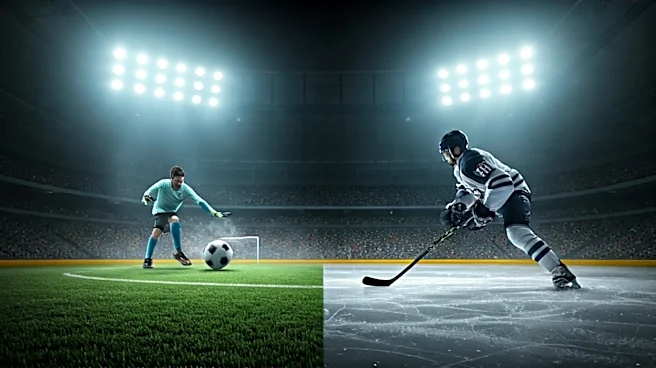
In both sports, the drama begins with the isolation. A single player separates from the team huddled at midfield. In soccer, the player walks from the center circle to the penalty spot, a long, lonely trek under the gaze of millions. In hockey, the player scoops
up the puck at center ice, the lone skater on a vast sheet, preparing their approach. This shared visual language is powerful. It strips away the context of the team—the brilliant passing sequence, the dogged defensive stand—and boils the entire result down to one person's skill and nerve against another's. This is the core of the comparison: both formats take a fluid, 11-on-11 or 5-on-5 contest and transform it into a high-stakes, individualistic spectacle. The collective 'we' of the team becomes the singular 'I' of the shooter.
The Goalie's Impossible Job
For the figure in goal, the experience is a study in contrasts. A soccer goalkeeper facing a penalty from 12 yards out is a massive underdog. The ball travels so fast that they must guess which way to dive before the ball is even struck. A save is a moment of heroic defiance against the odds. It’s a reactive, almost psychic challenge. A hockey goaltender, by contrast, has more agency but a more complex problem. They aren't guessing on a stationary shot; they are reading the skater's speed, dekes, and release angle. They can be aggressive, coming out to cut down the angle, or stay deep in the crease. While the soccer goalie’s job is about anticipating one explosive moment, the hockey goalie’s is about managing a three-to-five-second controlled attack. Yet, the emotional result is the same: they are the last line of defense, a hero if they succeed, and rarely blamed if they don’t.
The Shooter's Burden
The pressure on the shooter in both sports is immense, but it manifests differently. The soccer penalty taker has one job: beat the keeper with a single strike from a dead ball. There is time to think—often, too much time. The walk, placing the ball, stepping back, waiting for the whistle… it’s a mental marathon before a one-second sprint of action. The expectation is to score; a miss feels like a colossal failure. The hockey shooter’s task is more dynamic. They are in motion, forced to make decisions on the fly while handling the puck and reading the goalie. There's less time for negative thoughts to creep in, but more variables that can go wrong—a bobbled puck, a mistimed deke, a great defensive play by the goalie. The soccer penalty is a test of pure nerve and technique under static pressure, while the hockey shootout is a test of skill under dynamic pressure.
The 'Unfair' Tiebreaker
Perhaps the strongest link between the two is the widespread feeling among fans and purists that they are an unjust way to decide a game. The critique is simple: why should a game defined by teamwork, tactical shape, and endurance be decided by what amounts to a skills competition? It’s often labeled a 'lottery,' a coin flip that invalidates the effort of the preceding minutes (or hours). This is where the crucial difference in stakes appears. In the NHL, the shootout is a regular-season gimmick used to ensure a decisive result and award an extra point. It disappears entirely in the Stanley Cup Playoffs, where teams play continuous sudden-death overtime until a 'real' hockey goal is scored. The World Cup, however, uses the penalty shootout in its most high-stakes elimination games, including the Final. A team’s four-year cycle of hope and dreams can evaporate based on a single saved shot from 12 yards. The hockey shootout decides a point; the World Cup penalty shootout decides a legacy.