
Brazil's Jogo Bonito Masters: 1970
This wasn't just a team; it was a work of art. Broadcast to the world for the first time in vivid color, the 1970 Brazilian squad became the global benchmark for what soccer could be: joyful, audacious,
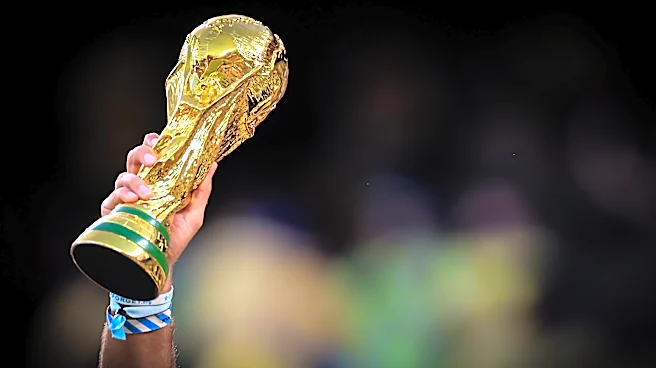
and relentlessly attacking. Led by Pelé in his final World Cup, this collection of superstars—including Jairzinho, who scored in every single game, Tostão, and the legendary captain Carlos Alberto—played a brand of football so fluid it felt choreographed. The final goal in their 4-1 victory over Italy, a sweeping team move culminating in Alberto's thunderous strike, is still considered by many to be the greatest goal ever scored. They didn't just win Brazil's third Jules Rimet trophy, allowing them to keep it permanently; they perfected *jogo bonito* (the beautiful game) and created a romantic ideal that every subsequent generation has been measured against.
The Netherlands' Total Football Revolution: 1974–1978
Legacy isn't always about lifting the trophy. Sometimes, it's about changing the game forever. The Dutch national team of the 1970s, led by the visionary Johan Cruyff, twice reached the World Cup final and twice fell at the last hurdle. Yet, their influence arguably surpasses that of many champions. They introduced the world to *Totaalvoetbal*, or Total Football, a revolutionary tactical system where any outfield player could take over the role of any other. Defenders surged forward, attackers dropped back, and opponents were left dizzy and disoriented by the constant, fluid movement. This wasn't just a formation; it was a philosophy built on spatial awareness, technical brilliance, and supreme conditioning. Players like Cruyff, Johan Neeskens, and Ruud Krol became tactical pioneers, and their ideas laid the groundwork for the modern pressing and possession styles seen in clubs like Barcelona and Manchester City today.
Spain's Tiki-Taka Dynasty: 2008–2012
Before 2008, Spain was soccer's great underachiever—a nation of immense talent that always found a way to lose. Then came an era of unprecedented dominance. For four years, Spain's national team was simply untouchable. Winning the 2008 European Championship, the 2010 World Cup, and the 2012 European Championship, they became the first nation to win three consecutive major international tournaments. Their method was a hypnotic, suffocating style of play known as *tiki-taka*. With a midfield core of Xavi Hernández, Andrés Iniesta, and Xabi Alonso, Spain passed opponents into submission, starving them of the ball and creating openings with surgical precision. It wasn't always the most thrilling, high-scoring soccer, but its effectiveness was undeniable. This was the ultimate team, a collective so technically and tactically superior that for half a decade, winning felt like an inevitability.
France's Modern Talent Factory: 2016–Present
If past eras were defined by a single generation, modern France feels like a bottomless well of world-class talent. Since reaching the Euro 2016 final, *Les Bleus* have been a constant presence in the final stages of major tournaments. They won the 2018 World Cup with a blend of youthful exuberance and veteran steel, then reached the 2022 World Cup final in a classic clash with Argentina. What defines this era is not one style, but an almost unfair concentration of individual brilliance. With a generational superstar in Kylian Mbappé leading the line, supported by a seemingly endless conveyor belt of elite players like Antoine Griezmann, N'Golo Kanté, and Aurélien Tchouaméni, France can play any way it needs to. They can be a pragmatic, counter-attacking force or a dazzling, dominant possession team. This adaptability, fueled by a depth of talent other nations can only dream of, has made them the defining force of the modern international game.