


The Power of the Profile
When you’re walking through the fog-filled corridors and strobe-lit rooms of a haunted house, you don’t have time to appreciate fine details. The creative minds behind Universal's annual event, including senior show directors like Charles Gray, know this
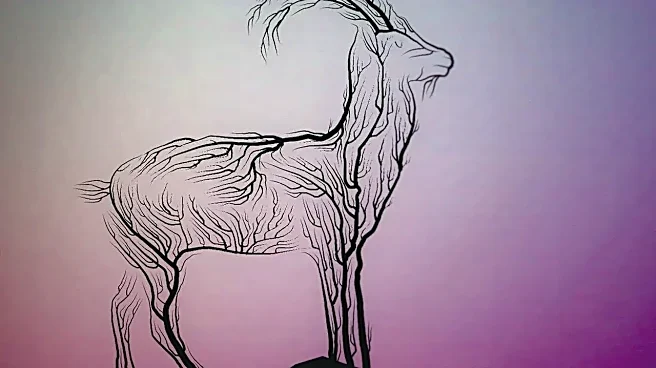
well. They understand that guests perceive monsters in quick, terrifying snapshots. That's why the design process for every creature begins not with the face or the guts, but with its silhouette. A monster must be instantly recognizable and threatening from its shape alone. Is it hulking and broad? Is it unnaturally tall and spindly? Does it have too many limbs? These are the first questions. This 'silhouette-first' philosophy ensures that even a fleeting glimpse in poor lighting is enough to trigger a primal sense of dread. The shape tells your brain something is fundamentally wrong before you can even process what you're seeing.
Designing for the Blink of an Eye
The entire environment of Halloween Horror Nights is engineered for sensory overload. You are bombarded with loud noises, disorienting lights, and scareactors approaching from all angles. The creative team’s job is to tell a story in what Gray refers to as “quick snapshots of moments.” This is where the silhouette proves its worth. A distinct and menacing shape can cut through the chaos and communicate danger instantly. Think of the most iconic horror villains: their silhouettes are legendary. The Universal team applies this same logic, whether adapting a character from a film or creating an original nightmare. The goal is to make a creature so visually distinct that its form is imprinted on your mind after just a second of exposure. That immediate readability is the key to a successful scare in an environment where attention is constantly being pulled in a dozen different directions.
Adding Detail for the Second Read
Just because the silhouette comes first doesn't mean the details are ignored. They are simply the second part of the equation, designed for the moments when a guest does get a longer look. This might happen in a brief, static scene, a rare well-lit area, or when a scareactor gets unnervingly close. These are what designers consider the “second read.” Once the core shape is established, artists layer on the textures, the color palette, and the specific costume elements that enrich the character. For example, when adapting film characters, the team will honor the source material while often adding a “modern-horror overlay” to enhance the fear factor for a live audience. These details reward the eye, but they are built on the non-negotiable foundation of a strong, immediately identifiable shape. Without it, the finer points would be lost in the dark.
Movement Creates the Monster
A creature’s silhouette isn’t just about its static shape; it’s also defined by how it moves. The design process is a deep collaboration that includes performance. The costume and prosthetics must not only look terrifying but also allow the scareactor to perform the specific movements that bring the character to life. A shambling zombie moves differently than a skittering insectoid creature, and that movement profile is part of its overall silhouette. The creative team, which includes veteran leaders like Lora Sauls, casts and trains performers to embody the physicality of these nightmares. The way a monster contorts its body, lunges, or stalks its victims is just as crucial as the shape of its mask. It's the combination of the visual form and its kinetic energy that ultimately sells the scare and makes the creature feel truly alive and threatening.