






The LED Screen Arms Race
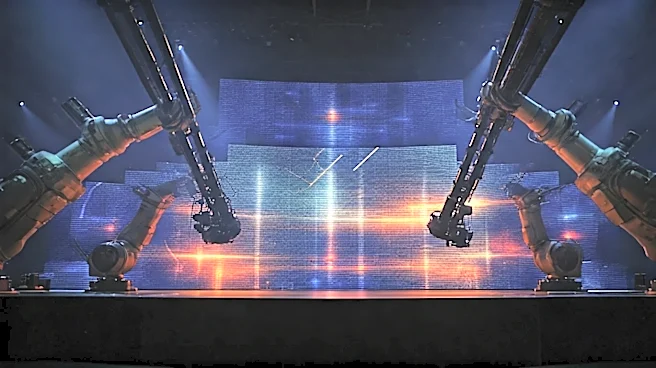
The most obvious sign of a hefty budget is the sheer acreage of LED screens. But all screens are not created equal. A simple, flat video wall behind the host is standard fare. The real money is in complexity. Are the screens curved, wrapping around the stage?
Are they transparent, allowing performers to be seen through them? Are they broken into dynamic, moving panels that reconfigure the space for each performance? Look for high-resolution, custom-shaped screens integrated into the flooring or ceiling. The more screens move, transform, or defy a simple rectangular shape, the more you're looking at a production that spared no expense on its primary visual canvas. This isn't just renting panels; it's custom engineering an entire visual environment.
Automation and The Art of Motion
A static stage is a relatively affordable stage. The moment things start moving, the budget balloons. Watch for elements that fly in from the rafters, artists rising from below the stage on hydraulic lifts, or large set pieces that travel on tracks. This is the world of theatrical automation, a highly specialized field requiring complex software, powerful motors, and rigorous safety protocols. If a performer is dancing on a platform that is tilting, spinning, and moving across the stage simultaneously, you're witnessing a massive investment. Companies like TAIT and Kinesys are the wizards behind this magic, and their work signifies a top-tier budget dedicated to creating dynamic, shape-shifting performance spaces.
The Augmented Reality Factor
One of the biggest budget tells in modern broadcasts is something that isn't even physically there. When you see stunning 3D graphics, floating song lyrics, or entire virtual worlds appear to envelop a performer on your TV screen, you're likely watching Augmented Reality (AR). This isn't a simple post-production effect; it's rendered in real-time during the live show. It requires specialized camera tracking systems (like Stype or Ncam) that know the camera's exact position in 3D space, and powerful graphics engines (like Unreal Engine) to generate the visuals. While sometimes used as a cost-saver to avoid building a massive physical set, a well-executed AR sequence is a hallmark of a cutting-edge, high-budget broadcast that is investing heavily in tech-forward visuals.
Practical Scenery vs. Digital Worlds
Pay attention to the texture of the sets. Is that a real, physical staircase the artist is walking on, or a hyper-realistic image of one on a screen? Practical sets—custom-built, physical scenery—are labor-intensive and often single-use, making them a significant line item. An elaborate, multi-story structure built for a single three-minute song is a flex. Conversely, a show that relies almost entirely on screens for its backdrops might be channeling its scenic budget into video content and technology instead of carpentry and paint. The most expensive productions often blend the two, with physical sets that are enhanced by or seamlessly integrated with digital elements, creating a layered reality that costs a premium to design and execute.
Lighting as a Budget Barometer
Any big show has a lot of lights. But the clue isn't quantity; it's quality and intelligence. Is the stage washed in a general, static color, or are there thousands of individual points of light creating intricate patterns and movement? Look for beams that slice through the air, change color, and move in sync with the music. These are “intelligent” moving-head fixtures, and a rig with hundreds or thousands of them is a serious expense. Lasers are another high-cost, high-impact tool. Even more advanced are kinetic lighting systems, where the fixtures themselves physically move up and down on winches, creating mesmerizing, three-dimensional sculptures of light. A sophisticated lighting design indicates a budget that prioritizes mood and energy just as much as scenery.