



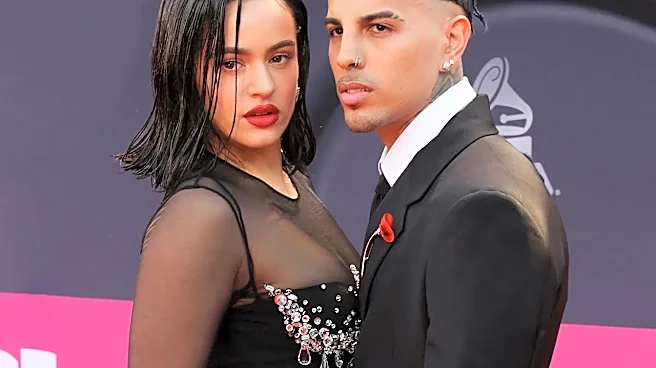

The 2026 Latin Grammys stage was set for a clash of titans. Not a rivalry, but a study in contrasts between two of Latin music’s most vital forces: Rosalía and Daddy Yankee. Their back-to-back performances were a tale of two philosophies.
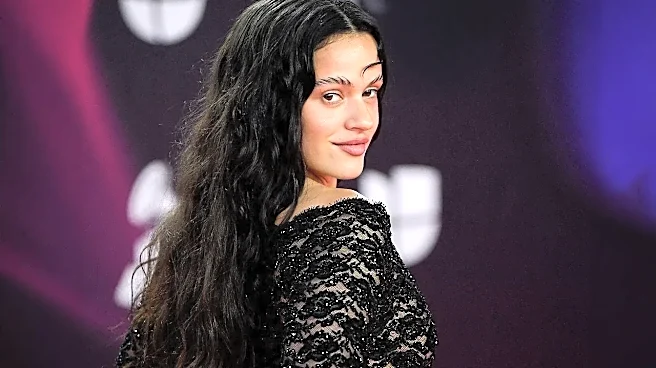
Rosalía: The Art-House Visionary
Rosalía’s performance
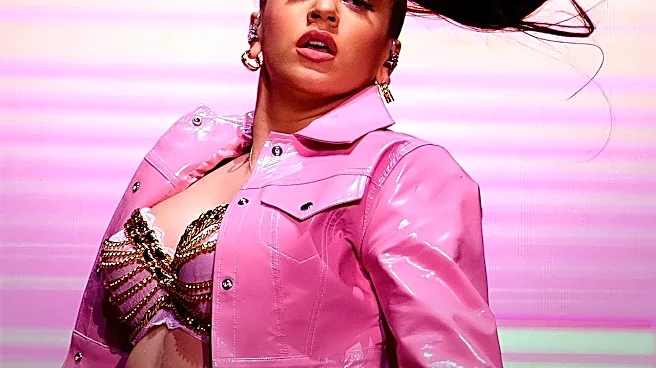
felt less like a concert and more like a piece of living, breathing visual art. Taking the stage with a stark, minimalist aesthetic, she transformed the arena into an intimate black-box theater. The stage was a clean white canvas, a deliberate choice that focused all attention on her and her troupe of dancers. The most defining feature was the ever-present Steadicam operator, who acted as both a ninth dancer and the audience's surrogate, capturing raw, intimate close-ups projected onto massive screens. This technique, honed during her 'Motomami' tour, creates a hyper-personal, almost voyeuristic experience, blurring the line between a live show and a meticulously directed film. The choreography was a fusion of jarring, experimental movements, traditional flamenco gestures, and moments of surprising vulnerability, reflecting her genre-bending music that pulls from avant-garde electronica and centuries-old tradition. It was a performance designed to be felt as much as seen, pulling the audience into her internal world rather than simply projecting outwards.
Daddy Yankee: The Reggaetón Stadium King
If Rosalía offered an internal monologue, Daddy Yankee delivered a triumphant, communal sermon. From the moment a CGI plane appeared to 'land' on stage, his performance was a masterclass in pure, unadulterated spectacle. As the 'King of Reggaeton,' his approach is about creating a massive, shared experience. The stage was a riot of pyrotechnics, confetti cannons, and hyper-realistic digital backdrops that changed with every song. Backed by a high-energy dance crew of sixteen, Yankee commanded the stage not as a distant icon, but as the charismatic host of the world's biggest party. His showmanship is rooted in connection and nostalgia. He constantly interacted with the crowd, shouting out flags he saw in the audience and turning his 30-year catalog of hits into a colossal call-and-response singalong. It’s a performance style built on generosity; the goal is to give the audience a non-stop barrage of joy, energy, and familiar anthems like 'Gasolina' and 'Con Calma' that have defined a generation.
Two Paths to Latin Pop Immortality
The contrast between the two could not have been more clear. Rosalía uses technology to create intimacy, turning giant arena screens into a TikTok-style close_up that examines her every expression. Daddy Yankee uses it to create scale, building immersive worlds for his audience to get lost in. Her relationship with her dancers is one of artistic symbiosis; they are a fluid, modern dance company telling a collective story. His dancers are a disciplined, high_impact force, amplifying the energy of the party he is leading. Rosalía challenges her audience with avant_garde concepts, asking them to lean in and interpret. Daddy Yankee embraces his, offering the comfort and euphoria of shared memories. One is a performance as a museum exhibit: provocative, personal, and demanding of your focus. The other is a performance as a national holiday: explosive, unifying, and designed for celebration.