




The Myth of Marathon Value
We’ve all been there: two hours into a concert, the energy begins to wane. The band dips into a few deep cuts that test the patience of all but the most die-hard fans. What started as an electrifying experience slowly becomes an endurance test. The modern
mega-concert often sells itself on volume—a sprawling setlist that promises your money’s worth. But quantity can be the enemy of impact. Just as a novel can get bogged down in subplots, a long concert can dilute its own power with filler and pacing lulls. The audience gets tired, the band gets tired, and the narrative arc flattens. The peak moments, the songs that truly define the artist, risk getting lost in a sea of pleasant-but-forgettable tracks. A great performance isn't measured in minutes, but in moments that stick with you long after the house lights come up.
Every Song a Chapter
Now, imagine the alternative: an artist takes the stage with only five songs to make their case. Suddenly, every choice becomes critical. There is no room for error, no space for a song that doesn’t serve the story. This is the art of narrative density. A five-song set forces an artist to think like a short story writer, not a novelist. Each track must be a distinct chapter, building on the last and setting up the next. The opening number has to grab the audience immediately, establishing a mood and a promise. The songs that follow must build tension, offer release, and reveal different facets of the artist’s identity. The final song acts as the powerful concluding sentence, designed to leave the audience breathless and wanting more. This deliberate structure turns a simple performance into a cohesive, emotional journey.
The Moment That Changed Everything
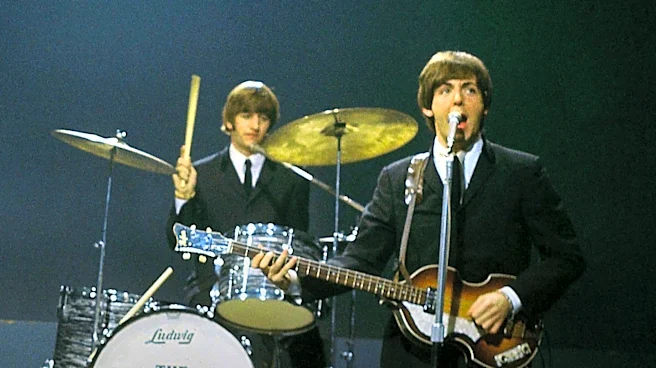
For a historical case study, look no further than February 9, 1964. The Beatles stepped onto the stage of The Ed Sullivan Show to perform five songs for a record-breaking television audience. With "All My Loving," "Till There Was You," "She Loves You," "I Saw Her Standing There," and "I Want To Hold Your Hand," they didn't just play a few tunes; they launched a cultural invasion and inspired a generation of future musicians. Those five songs, split into two segments, were a perfectly distilled package of charm, energy, and revolutionary sound. They didn't need two hours to change the world; they needed about 15 minutes of pure, concentrated magic. That performance remains a watershed moment not because of its length, but because of its world-altering impact.
The Modern Proving Ground: Tiny Desk
Today, the spirit of the short, impactful set lives on in NPR's Tiny Desk Concerts. In this famously intimate setting, some of the world's biggest stars are stripped of their stadium production and forced to reconnect with the core of their music. The format—typically three to five songs performed in a crowded office—has become a massive cultural phenomenon, often providing a career-defining moment for artists. Established acts use the opportunity to present beloved songs in a new, raw light, while emerging artists can find their careers launched into a new stratosphere. The constraint of the format is its greatest strength. It forces honesty, creativity, and a level of intimacy that a massive arena show can rarely replicate, proving that a small stage can often be the biggest in the world.