







The Power of the Personal
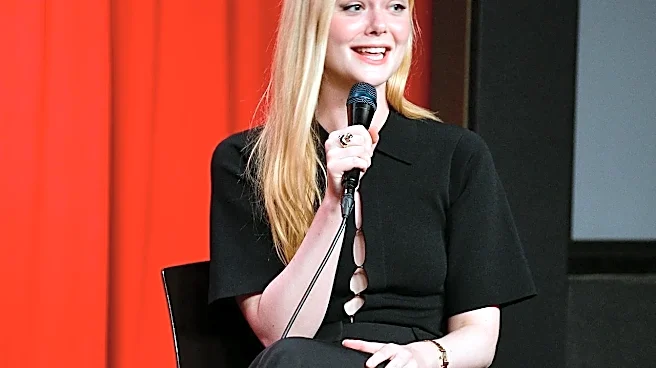
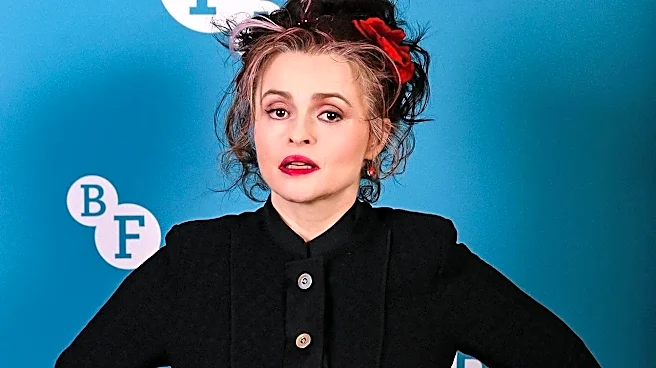
Sofia Coppola has built a career exploring the inner lives of characters adrift in beautiful, often isolating circumstances, from 'Lost in Translation' to 'Priscilla'. Her conversation at the BFI London Film Festival served as a powerful reminder that
her distinct directorial voice stems from a deeply personal place. The event coincided with a festival screening of her mother Eleanor Coppola’s documentary, 'Making Marie Antoinette', a film that explores the pressures on female artists. This context underscored a key theme of the discussion: the challenge of forging a unique artistic identity, especially in the shadow of a famous father. Coppola's journey, from early acting roles in her father's films to becoming an Oscar-winning screenwriter and director, is a testament to her quiet persistence in telling the stories that matter to her, on her own terms.
An Atmosphere First, a Story Second
For many directors, the script is the unshakeable foundation. For Coppola, it’s often a feeling, a color palette, or a song. This 'atmosphere-first' approach is central to her directorial voice. Fans of her work will not be surprised to learn she often builds her films around a carefully curated collection of music that captures a specific mood before the plot is fully locked in. This is why her soundtracks, from the indie-pop melancholy of 'The Virgin Suicides' to the anachronistic punk of 'Marie Antoinette', feel less like a background score and more like a main character. Her films are less about what happens and more about what it feels like when it happens. The Screen Talk affirmed that this isn’t a happy accident but the very core of her method: to translate an internal, sensory experience into a visual and auditory world for the audience to inhabit.
In Defense of the 'Privileged' Character
A frequent, and arguably shallow, criticism of Coppola's work is its focus on privileged, seemingly passive characters. Her filmography is populated by lonely celebrities, isolated royals, and listless teens in gilded cages. Her discussion at the festival offered a subtle but firm rebuttal. Her interest lies not in their wealth, but in their emotional state—the universal feelings of disconnection, longing, and the search for identity that can occur in any environment, but are perhaps amplified by the gilded cage of fame or luxury. By focusing on the quiet, in-between moments that most films skip, she captures a different kind of truth. Her 'directorial voice' is one that speaks for the interiority of its subjects, suggesting that a character’s emotional landscape is a destination just as worthy of exploration as any physical one.
A Style That Shaped a Generation
It's difficult to overstate Coppola's influence on contemporary visual culture. The dreamy, sun-drenched aesthetic of her films has been absorbed into everything from fashion photography to music videos and social media. Her work proved that a quiet, feminine, and aesthetically driven perspective could be just as powerful and resonant as a loud, plot-driven one. Her first feature, 'The Virgin Suicides', established this signature style immediately, creating a haunting portrait of youth that was both beautiful and deeply sad. The conversation in London was a chance to reflect on this legacy. While she may not have set out to define a generation's visual language, her commitment to her own unique and sincere way of seeing the world did just that. Her voice became a style, and that style became a global mood board.