
The Ghost of Outfits Past
Let’s be honest: the first draft of the skirt-over-pants trend was messy. The early 2000s version was defined by its deliberate carelessness. Think of a denim mini skirt thrown over flared jeans, a ruffled floral number layered on top of capris, or a sequined
handkerchief hem inexplicably paired with baggy trousers for a movie premiere. It was the uniform of teen pop stars and Disney actors like Ashley Tisdale and Miley Cyrus, who wore it to project an air of rebellious nonchalance. The goal wasn't cohesion; it was to prove you were too cool to care, even on a red carpet. The layers often clashed in color, fabric, and purpose, creating a look that many were happy to leave in the past. For years, it stood as a cautionary tale in layering, a symbol of Y2K’s more chaotic fashion impulses.
The New Rules of Proportion
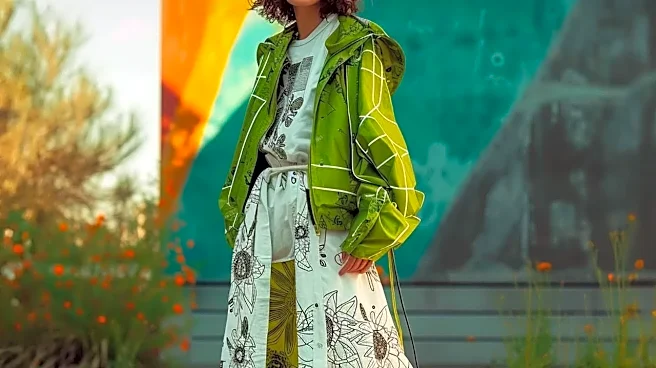
So, why does the 2026 version feel so different? It all starts with proportion. The modern formula rejects the old high-contrast, low-effort pairings. Instead of a tiny skirt over flared jeans, the contemporary approach is about creating a single, elongated silhouette. Think of a fluid, knee-length skirt worn over coordinating straight-leg trousers or a long, tunic-like dress layered over wide-leg pants. The key is that the pieces share a similar line and flow. When done right, the skirt and pants read as a single, dimensional garment rather than two separate items fighting for attention. This new look is less about Y2K quirkiness and more about a sophisticated, architectural approach to dressing that feels intentional and grown-up.
It’s All in the Details
Beyond just the shape, the success of the modern skirt-over-trousers look lies in texture and color. While the Y2K era embraced clashing denim and garish prints, today’s take is far more restrained and polished. Monochromatic or tonal pairings are a popular entry point, where a skirt and trousers in the same color family create a seamless, column-like effect. This approach makes the layering feel subtle and chic, like a deconstructed suit. Another key is the interplay of fabrics. Unexpected combinations like a sheer, gauzy skirt over structured wool trousers, or a slinky satin slip dress over crisp cotton pants, create a rich textural contrast that feels deliberate and luxurious. The top half of the outfit is also crucial; keeping it simple with a fitted knit or a classic button-down ensures the sophisticated bottom layers remain the focus.
More Than a Trend, It’s a Tool
Ultimately, the skirt-over-trousers revival isn't just about nostalgia; it’s about utility. For many, it’s a practical solution for transitional weather, offering the coverage of pants with the movement of a skirt. It also serves as a confidence tool, allowing people to wear sheer fabrics or shorter hemlines they might otherwise avoid. The trend has roots in a broader move toward looser, more fluid, and often gender-neutral silhouettes. Its history stretches back further than the 2000s, with echoes in 19th-century dress reform movements where women wore bloomer-style trousers under skirts for greater mobility. In its current form, it’s a versatile styling trick that allows you to get more wear out of your existing wardrobe, reframing pieces in a new context. Some brands are even selling built-in trouser-skirt hybrids, taking the guesswork out of getting the proportions right.