
A Closed Narrative Loop
The most significant advantage of a limited series is its defined narrative structure. With a clear beginning, middle, and end, creative teams can approach the project like a long feature film rather than
an open-ended commitment. For a costume designer, this means mapping a character's entire emotional journey through their wardrobe from the first scene to the last. For a production designer, it allows for the creation of a complete, cohesive world without worrying about how the sets will need to evolve over five seasons. This fixed endpoint encourages a unified artistic vision. Unlike a traditional series that might change showrunners, directors, or its core aesthetic over the years, a limited series is a self-contained universe. This allows for a level of planning and detail that is often impossible when a show’s future is uncertain, enabling craft departments to execute a singular, ambitious concept with precision.
The Prestige Magnet
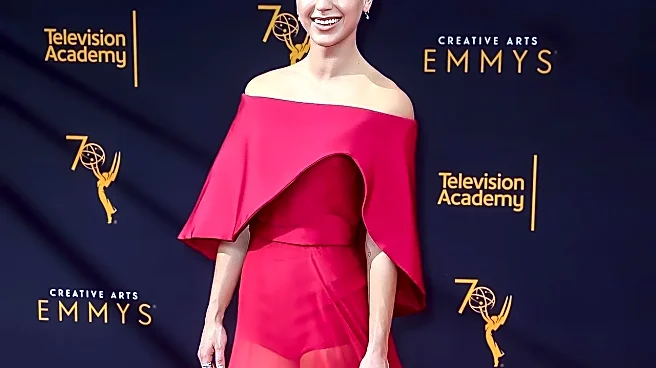
The limited series format is uniquely attractive to A-list talent. Major film actors and directors are often hesitant to sign on for a multi-year television contract, but the commitment of a single, 6- to 10-episode season is far more appealing. This influx of marquee names—both in front of and behind the camera—elevates the entire production, turning the series into a high-profile cultural "event." With big stars come big budgets. Streaming services and premium cable networks are willing to invest heavily in these prestige projects, knowing they generate buzz and attract subscribers. That financial investment trickles down directly to the craft departments. Lavish budgets allow for period-accurate costumes, elaborate set construction, and cutting-edge visual effects that rival what's seen in blockbuster films. This financial freedom gives artisans the resources to do their most ambitious work, making these shows prime contenders for Creative Arts Emmys.
A Playground for Auteurs
Modern prestige television has seen the rise of the director-as-auteur, and the limited series is their perfect canvas. When one director, like Cary Joji Fukunaga on "True Detective" or Johan Renck on "Chernobyl," helms every episode, it creates a consistent visual language and tone that would be difficult to achieve in a series with a rotating roster of directors. This gives cinematographers, editors, and composers the opportunity to build a distinct and immersive style from the ground up. The result is a more cinematic experience, where every camera movement, cut, and musical cue serves a single, overarching vision. This holistic approach is a dream for craftspeople, who can collaborate deeply to ensure every element—from the sound mix to the color grade—is in perfect harmony. It's this level of detailed, auteur-driven craftsmanship that consistently captures the attention of Television Academy voters.
The Genre Gauntlet
Limited series are often the go-to format for genres that demand intensive craftwork. Historical epics require meticulous research and execution in both production and costume design to transport audiences to another era. High-concept science fiction relies on groundbreaking visual effects, sound design, and imaginative sets to build believable new worlds. Gritty crime dramas use cinematography and editing to create a palpable sense of mood and tension. Because the story is finite, creators can pour all their resources into perfecting a specific, challenging aesthetic without having to sustain it indefinitely. This makes the format a natural home for the most visually ambitious stories on television. Whether it's recreating a historical moment with painstaking accuracy or inventing a surreal landscape from scratch, the limited series provides the ideal framework for craft departments to truly shine and push the boundaries of what's possible on the small screen.