







The Man Behind the Monster
Boris Karloff, born William Henry Pratt, was the furthest thing from the grunting monster he famously portrayed. He was a dignified, well-spoken Englishman who came from a family of diplomats. Before his big break in 'Frankenstein' at age 44, he had already
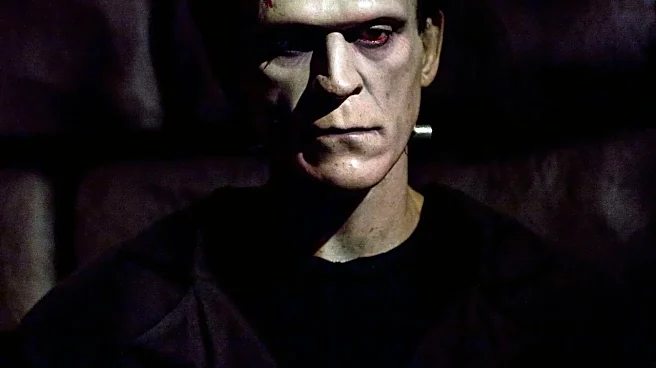
appeared in dozens of silent films, honing his craft through sheer repetition and hard labor. His approach was not one of emotional turmoil but of immense technical skill and professionalism. Karloff viewed acting as a job that required discipline. He famously endured grueling makeup sessions, sometimes for over 25 hours at a stretch, and suffered long-term physical ailments from the heavy costumes. Yet, he brought a profound humanity and pathos to his creatures, using subtle physical cues and his expressive eyes to convey complex emotions without pages of dialogue. This was external technique used to build an internal reality, an 'outside-in' approach that focused on the physical to unlock the psychological.
An Unlikely Pillar of the Profession
The headline's claim is less about Karloff directly teaching Method actors and more about how he fundamentally changed the environment in which they worked. Appalled by the dangerous conditions and exploitative hours endemic in early Hollywood, Karloff became a key founder of the Screen Actors Guild (SAG) in 1933. He was member number nine. It wasn't uncommon to see him, still in full monster makeup on the set of 'Frankenstein', handing out union applications to fellow actors. This fight for actors' rights—for fair pay, reasonable hours, and safe working conditions—created a professional foundation that allowed all subsequent generations of actors, including the Method trailblazers of the 1950s, to treat acting as a serious, protected career rather than a hazardous gig. By demanding respect for the profession, he elevated the craft for everyone.
A Different Kind of 'Method'
While Lee Strasberg's Method acting taught actors to draw on their own emotional memories to fuel a performance ('inside-out'), Karloff's work provided a powerful counter-narrative. His performances were a masterclass in using the external to create a character. In 'The Mummy,' he conveyed a tragic longing through little more than his eyes and subtle movements. Later in his career, in films like 'The Body Snatcher,' he created terrifyingly human villains without any monster makeup at all, relying purely on his presence and craft. This demonstrated that deep, believable characterization did not have to come from psychological self-excavation. For acting teachers and students who came after him, Karloff's career became a crucial case study. He represented an alternative path, one where physical transformation, vocal control, and a deep understanding of the script could create a performance just as profound as one born from emotional recall.
The Legacy of a Consummate Professional
The true reshaping came from the example Karloff set. He never disparaged his typecasting in horror, instead embracing it and elevating the genre with his dignity and commitment. While some Method actors became famous for their on-set antics, Karloff was known for his gentlemanly demeanor, his tireless work ethic, and his profound respect for his fellow actors. This professionalism became its own form of influence. Acting schools and workshops couldn't ignore the man who co-founded the actors' union and proved that genre work could be art. His career demonstrated that an actor could be both a popular icon and a serious craftsman. In this way, he didn't just influence a single style of acting; he helped define what it meant to be a working actor in Hollywood, a legacy that informed the teaching and practice of the craft for decades.