







The Global Block Party
There’s a unique magic to a World Cup, a Euros, or a Copa América. Unlike the week-in, week-out grind of a domestic league, these tournaments are compressed, high-stakes festivals of sport. They transform bars into miniature stadiums and office Slack
channels into hotbeds of tactical debate. For a month, the world shares a single narrative. In the U.S., where soccer’s cultural foothold grows with each passing year, these events are an open invitation to a global phenomenon. But if you don’t have a horse in the race—no ancestral tie to Italy, no long-held love for Argentina—how do you participate? You can’t just passively watch; the joy is in the investment. You need a way to feel like you belong.
The Power of a Uniform
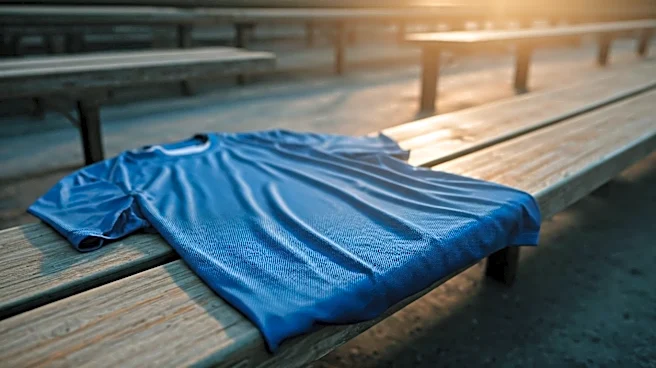
This is where the jersey comes in. It’s more than just a shirt; it’s a uniform, a low-stakes costume that instantly signals your temporary allegiance. Think of it as a social shortcut. Walking into a crowded bar, you’re not just a person watching a game; you’re a fellow sufferer in a sea of Netherlands orange, a hopeful celebrant draped in Brazil’s iconic yellow. For a few hours, you’ve opted in. The jersey bridges the gap between being a curious observer and an active participant. It gives you a reason to cheer for a brilliant goal and groan at a missed penalty. It manufactures the emotional connection that die-hard fans spend a lifetime cultivating. There’s a reason armies wear uniforms and schools have dress codes: shared attire builds instant community. A soccer kit does the same for the pop-up tribe of tournament fandom.
From Pitch to Street Style
This phenomenon has been supercharged by soccer's full-blown arrival in the fashion world. For decades, wearing a soccer jersey outside of a stadium was a clear sign you were either a child or a tourist. Not anymore. Thanks to trends like “blokecore” and “terrace culture” nostalgia, soccer kits—especially retro ones—are now legitimate style items. Brands like Adidas and Nike have capitalized on this, reissuing classic designs like West Germany’s 1990 kit or Nigeria’s 2018 instant-classic. This fashionability removes another barrier for the neutral. You’re not just picking a team; you’re making an aesthetic choice. Does France’s deep blue elegance speak to you? Or maybe the minimalist cool of Japan’s latest design? The jersey becomes a piece of personal expression, freeing you to choose a side based on vibes, not just victory odds.
Choosing Your Temporary Tribe
For the uninitiated, picking a team to support for a month can feel arbitrary. Do you go with the favorite? The exciting underdog? The team with a superstar like Kylian Mbappé or a compelling narrative like Denmark’s recent tournament runs? Fashion offers a simple, tangible tie-breaker. Liking a team because they have the coolest jersey is no less valid than liking them because your grandfather’s cousin once visited there. It’s a sensory decision that provides an immediate, visual anchor for your new-found loyalty. That simple choice—pulling a German away kit over your head—transforms a game between strangers into *your* game. Your team is now on the field. Suddenly, the stakes feel real, your cheers are earned, and for 90 minutes, you’re no longer a neutral.