


The Battle for Your Attention
A music festival isn’t a sterile concert hall; it’s a chaotic, vibrant ecosystem of distraction. Tens of thousands of people are navigating overlapping schedules, choosing between two favorite bands playing at the same time, deciding on their next food
truck adventure, or simply trying to find their friends in a sea of humanity. Unlike an arena show where every single person bought a ticket specifically to see one headliner, a festival audience is a mix of die-hard fans, casual listeners, and curious passersby. In this environment, an artist’s 45- or 60-minute set isn’t a performance for the faithful—it’s an audition. Attention is the scarcest resource on the field, and you have seconds to capture it. A deep cut or an experimental B-side, however artistically valid, is a gamble. It asks an already overstimulated audience to do homework, to lean in and learn something new. A monster hit does the opposite. It’s an immediate, universal signal that requires no effort to enjoy.
Winning Over the Casual Listener
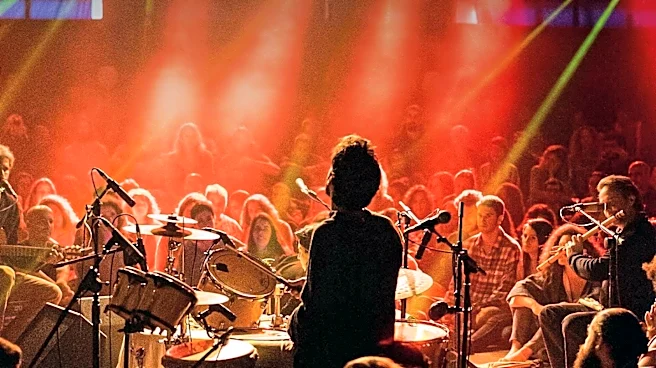
The power of a festival set lies in its ability to create a moment of mass connection. Psychologists talk about “collective effervescence,” that transcendent feeling of being part of something bigger than yourself. It’s the magic that happens when a thousand strangers sing the same chorus in unison, their individual anxieties melting away into a shared, joyous identity. That magic rarely happens with a song nobody knows. Familiar music triggers a dopamine release in the brain, a literal “feel-good” chemical rush. It taps into the mere-exposure effect, a psychological principle where we naturally prefer things we’ve been exposed to before. For the person who only knows two of a band’s songs, hearing one of them is a moment of inclusion. They can finally lower their phone, stop chatting, and fully participate. The artist isn't just playing a song; they're sending out an invitation to a communal experience, and the price of admission is simply knowing the tune.
The Setlist as a Business Card
For many artists, especially those in the middle of the lineup, a festival slot is one of the most important marketing opportunities of the year. It's a chance to play for a crowd ten times larger than their average headlining show, a massive pool of potential new fans. Seen through this lens, the setlist becomes less of an artistic statement and more of a strategic tool—a high-impact business card. The goal is conversion: turning the curious into followers, followers into ticket-buyers, and ticket-buyers into merchandise-wearers. A set packed with proven, high-energy hits is the most efficient way to achieve that. It showcases the artist at their most accessible and impactful, leaving the audience with a powerful, positive impression. Wasting that precious time on self-indulgent new material that doesn't land is a massive unforced error, a squandered opportunity to expand their reach in a brutally competitive industry.
The Rare Exceptions to the Rule
Of course, this isn't an ironclad law. Novelty can and does work, but usually only under specific circumstances. A globally recognized superstar can command attention no matter what they play; their presence alone is the event. A highly anticipated lead single from a beloved artist’s upcoming album can create its own buzz, turning the set into a must-see world premiere. Some niche festivals, where the entire audience is composed of devoted genre enthusiasts, offer more leeway for experimentation. But these are the exceptions that prove the rule. For the vast majority of working musicians trying to climb the festival ladder, the logic is undeniable. You have one shot to make thousands of people remember your name. Playing the hits isn’t selling out; it’s understanding the assignment.