







The Foolish, Lovable Hero on a Quest
The central figure of Homer's epic poem, The Odyssey, is Odysseus, a hero known for his cunning but also for his profound flaws. He's arrogant, gets sidetracked by temptation, and often makes things worse for himself and his crew. Sound familiar? Homer Simpson
is a modern-day Odysseus, driven not by a desire to return to Ithaca, but by a craving for donuts, a new get-rich-quick scheme, or simply getting off the couch. Like his ancient counterpart, Homer is a family man at his core, and his weekly "odysseys" are mini-quests that see him overcoming trivial obstacles with a bizarre mix of stupidity and accidental genius. In one episode, Homer literally becomes Odysseus, in a direct parody that showcases the shared DNA. The episode, "Tales from the Public Domain," casts Homer as the hero, Marge as Penelope, and Mr. Burns as a meddling god, proving the writers know exactly which ancient playbook they're stealing from.
An Epic Journey Under the Sea
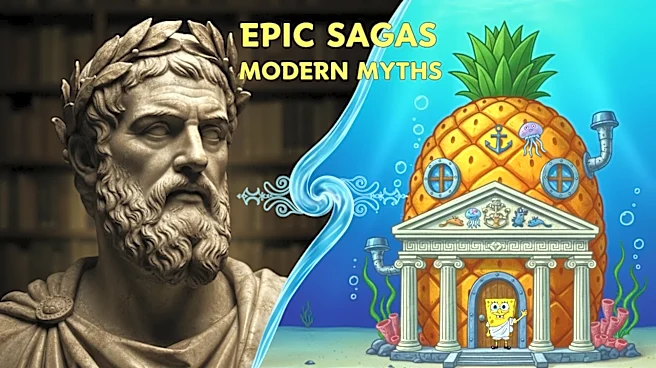
The structure of an epic journey—a series of episodic adventures and bizarre obstacles—is a staple of modern television. Look no further than The SpongeBob SquarePants Movie. On a quest to retrieve King Neptune's crown and save Mr. Krabs, SpongeBob and Patrick leave the safety of Bikini Bottom and embark on a perilous journey. Their adventure is a surprisingly faithful, if absurd, retelling of The Odyssey's core themes. They face a Cyclops (a deep-sea diver), are tempted by Sirens (an ice cream stand that's actually a monster's tongue), and receive a bag of winds meant to help them home, a direct pull from Homer's tale. Even the themes of hospitality and its abuse, central to The Odyssey, are present as SpongeBob and Patrick navigate the dangers of the Thug Tug bar. Their journey proves that an epic quest doesn't need to be tragic; it can be a hilarious vehicle for character growth, even for a porous, yellow fry cook.
A Pantheon of Meddling Bosses and Neighbors
What would a hero be without powerful, often petty, figures making their life difficult? In Greek epics, it was the gods on Mount Olympus who toyed with mortal affairs for their own amusement. In modern comedies, these roles are filled by a different kind of pantheon: bosses, neighbors, and rivals. Mr. Burns functions as a wrathful Zeus or a miserly Hades, holding the fate of Springfield in his hands. Ned Flanders, with his saintly patience, can be seen as a minor god of frustrating benevolence. In Bikini Bottom, Squidward Tentacles and Plankton are the Poseidons of SpongeBob's world, constantly trying to thwart his good cheer or steal his Krabby Patty formula. These characters create the external conflicts that force our heroes into action, acting as modern, comically mundane versions of the divine forces that drove ancient narratives.
The Timeless Appeal of Tremendous Trifles
Ancient Greek comedy, much like our modern sitcoms, often revolved around ordinary people in absurd situations. Playwrights like Aristophanes used comedy to satirize politics and culture, a tradition that continues in shows like The Simpsons. The structure of the modern sitcom—a problem is introduced, attempts to solve it make it worse, and everything returns to normal by the end—is a formula designed for repeatable, episodic storytelling. This structure turns what sitcom writers call a "tremendous trifle"—a problem that feels life-or-death to the character but is trivial to the audience—into the engine of the plot. Whether Odysseus is trying to escape a cyclops or Homer is trying to build a spice rack, the stakes feel enormous to them. This template, refined over millennia, allows for endless variation while tapping into the same fundamental human experience: the heroic struggle against everyday chaos.