







First Off, It's Way Bigger
Before you start planning your office pool, you need to understand the biggest change: the 2026 World Cup is expanding from 32 teams to 48. This isn't just a small tweak; it completely overhauls the tournament structure and, more importantly, how your bracket
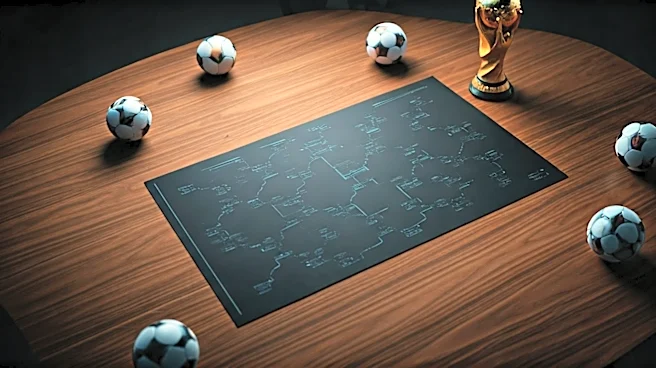
will work. Forget the clean, symmetrical 32-team bracket that fit neatly on one page. The new format introduces more teams, more games, and a whole new knockout round. For Americans used to the 64-team March Madness bracket, this might sound simple, but soccer tournaments have a crucial first step that makes them a unique challenge: the group stage.
Welcome to the Group Stage
Unlike March Madness, the World Cup doesn't start with single-elimination games. The 48 teams will be drawn into 12 groups of four. Within each group, every team plays the other three once in a round-robin format. This is the part that often trips up casual viewers. Teams get three points for a win, one for a draw, and zero for a loss. At the end of these three matches, the teams are ranked within their group. This phase is all about accumulating points to survive and advance. It’s less of a bracket and more of a mini-league, and it’s where a nation's World Cup dreams often live or die before the 'real' bracket even begins.
The Tricky Part: Who Advances?
Here's where your bracket strategy gets interesting. With 12 groups, how do you get to a clean knockout number like 32? Simple: the top two teams from each of the 12 groups automatically advance. That accounts for 24 teams. The remaining eight spots are filled by the best-performing third-place teams from across all the groups. This “wild card” element adds a layer of chaos and excitement. A team could lose a game, draw one, and win one, and still potentially advance based on goal difference or other tiebreakers. This means that even in the final minutes of the group stage, teams in completely different groups can affect each other's destinies. It makes for incredible drama.
Now, It Finally Looks Like a Bracket
Once the group stage chaos is over and we have our 32 survivors, the tournament transforms into the familiar single-elimination format we all know and love. This is where your bracket sheet will start to look more traditional. The tournament proceeds with a brand-new Round of 32, followed by the Round of 16, quarterfinals, semifinals, and the final. From this point on, it’s win or go home. There are no more points, no more draws (games go to extra time and penalty shootouts if tied). This is the straightforward, high-stakes drama that makes knockout tournaments so compelling.
How to Run Your Office Pool
So, how do you manage a bracket pool with this new system? First, wait for the official FIFA group draw (typically held in December before the tournament). Don't use a generic template. Once the groups are set, consider a two-part scoring system. Award points for correctly predicting which teams finish first and second in each group, and maybe a bonus for correctly picking a third-place team that advances. Then, shift to a classic bracket scoring model for the knockout rounds, with points doubling each round (e.g., 1 point for the Round of 32, 2 for the Round of 16, 4 for the quarters, and so on). This hybrid approach rewards both group stage knowledge and knockout round luck, making it fun for soccer die-hards and casuals alike.