


The Back Four Is Your Secondary
In the NFL, the secondary’s job is to prevent the deep ball and keep everything in front of them. The four defenders who typically make up a soccer team’s back line have the exact same core responsibility. Think of the two central defenders (center-backs)
as your safeties. They are the last line of defense, responsible for dominating the most dangerous area—right in front of the goal. They’re physical, read the game from a deep position, and are expected to be dominant in the air, like a safety coming down to break up a pass over the middle. The two outside defenders (full-backs) are your cornerbacks. Their primary job is to defend the wide areas, preventing attacking players from getting down the sidelines to whip in a cross (the soccer equivalent of a deep sideline pass). And just like modern cornerbacks who are expected to contribute to the run game, full-backs are now a huge part of the attack, overlapping on offense to create mismatches.
The High Press Is a Blitz
You know that feeling when your team’s defensive coordinator sends the house on 3rd and 7? That high-risk, high-reward explosion of aggression designed to force a turnover or a sack? That’s a high press in soccer. Instead of sitting back, a team will push its attackers and midfielders forward to aggressively pressure the opponent in their own defensive third, trying to win the ball back close to the goal. Like a blitz, it’s a gamble. If it works, you create a turnover in a prime scoring position against a disorganized defense. It’s an instant offensive opportunity. If it fails—if the opponent breaks the press—you’ve left acres of space behind your players, and you’re suddenly vulnerable to a quick counter-attack, just like giving up a huge gain after a screen pass beats the blitz.
The Low Block Is a “Bend-Don’t-Break” Defense
On the opposite end of the spectrum is the “low block,” affectionately (or derisively) known as “parking the bus.” This is soccer’s ultimate bend-don’t-break strategy. A team employing a low block will pull almost all of its players deep into its own defensive half, often with two tight, compact lines of four defenders and midfielders. They concede possession in non-threatening areas (the middle of the field) but clog all the passing lanes near their own goal. It’s the exact same philosophy as an NFL defense giving up 4-yard checkdowns between the 20s but locking down the red zone. The goal is to frustrate the opponent, limit high-percentage shots, and force them into low-probability long-range efforts. It might not be pretty, but it’s a pragmatic way for an outmatched team to stay in the game.
Zonal Marking Is Zone Coverage
This is the most direct comparison. For decades, NFL defenses have relied on zone coverage schemes (Cover 2, Cover 3, etc.) where a player is responsible for a specific area of the field rather than a specific player. Modern soccer is exactly the same. The vast majority of teams use zonal marking. Each defender and midfielder is responsible for a “zone.” When an opponent enters their zone, they become the defender’s responsibility. When they leave it, the defender “passes them off” to the next teammate. It requires immense communication and cohesion to maintain the team’s defensive shape and not let players drift into open space between the zones—the same way a quarterback will try to hit a receiver in the soft spot between a cornerback and a safety in a Cover 2.
The Defensive Midfielder Is Your All-Pro Linebacker
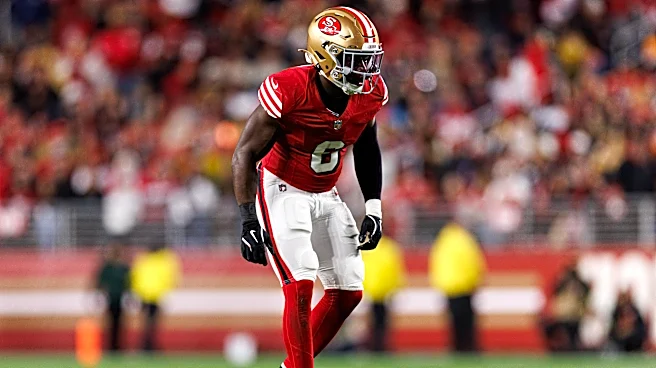
If you want to find the one player who dictates everything for the defense, stop watching the defenders and find the defensive midfielder (often called the “No. 6”). This player is the Luke Kuechly or Fred Warner of the pitch. They operate in the space between the defense and the midfield, and their job is to destroy attacks before they even start. They are the quarterback of the defense, reading the game, anticipating passes, breaking up plays, and making crucial tackles all over the middle of the field. They are the connective tissue, the enforcer, and the tactical brain—the single most important player in most modern defensive systems.