



The Ultimate Storytelling Cheat Code
At its core, a mask is a perfect plot device. It allows a story to build immense suspense around a central question: who is that? This is the entire premise behind the slasher genre, from the film franchise that inspired MTV's "Scream" series to the hooded
tormentor in "Pretty Little Liars." The mask allows the villain to be a known character, hiding in plain sight. Every interaction becomes retroactively significant once the face behind the disguise is revealed. The fun for the audience is in the guessing game, turning viewers into detectives. This device isn't just for horror; the reality competition show "The Masked Singer" has built a global phenomenon on this exact principle, proving that the desire to know who is behind the mask is a universally compelling hook.
Anonymity, Freedom, and True Selves
Paradoxically, a mask that hides a face can often reveal a character’s true nature. Anonymity provides freedom from social consequences, allowing a character to act on their darkest impulses or their most repressed desires. In "Pretty Little Liars," the multiple villains who adopt the "A" persona use their concealed identity to execute elaborate schemes of blackmail and terror, actions they could never attempt as their unmasked selves. The mask becomes a symbol of their power and their liberation from conventional morality. On a classic episode of "The Twilight Zone" titled "The Masks," a wealthy patriarch forces his cruel family members to wear masks that reflect their odious personalities. By the end of the night, their faces have physically contorted to match the ugly masks, a powerful metaphor for how an external persona can eventually reveal the true self beneath.
The Ritual of the Unmasking
The climax of any masked storyline is the reveal itself. This moment is a carefully constructed ritual designed for maximum dramatic impact. It's rarely a quick pull-off. Instead, it’s a slow, deliberate motion, often filmed with cuts to the shocked faces of other characters. When done well, the reveal forces the audience to instantly re-evaluate everything they thought they knew. A prime example, though not involving a literal mask, is the stunning twist at the end of the first season of "The Good Place." Michael, the seemingly benevolent architect of a utopian afterlife, reveals he is actually a demon, and the "Good Place" is an elaborate torture experiment. His friendly, human-loving persona was the mask, and its removal reframed the entire series, delivering a massive payoff to viewers.
Beyond the Villain's Disguise
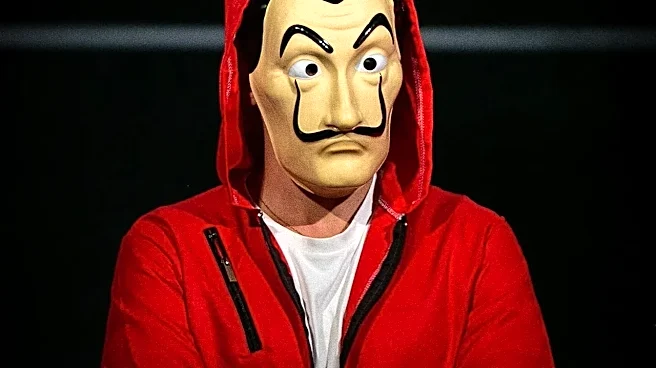
While often associated with villains, the mask trope is surprisingly versatile. It can be used for comedic effect, as seen in countless sitcom Halloween episodes where mistaken identities lead to chaos, like in "It's Always Sunny in Philadelphia's" memorable "Who Got Dee Pregnant?" episode. It can also be used for romantic reveals or to explore a hero’s internal conflict. In a broader sense, a character's costume is their everyday mask, a visual shorthand for their personality, status, and journey. A superhero’s costume, for instance, is a mask that allows an ordinary person to embody an extraordinary ideal. Whether it’s a cheap plastic Halloween mask or a carefully constructed persona, the function is the same: it allows television to play with the fascinating gap between who a character appears to be and who they truly are.