


What Exactly Is a False Focal Point?
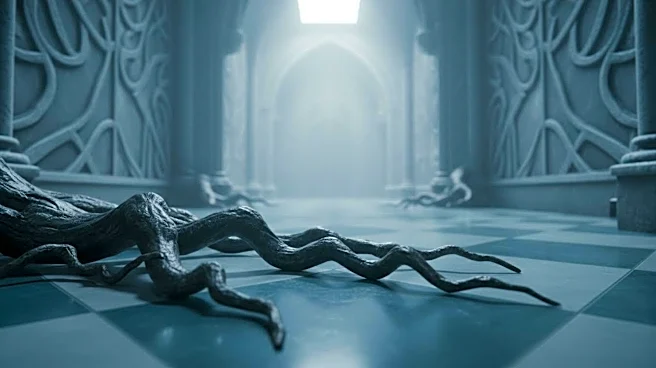
Imagine walking down a dark, decrepit hallway. At the far end, a massive, grotesque monster thrashes under a flickering spotlight. It roars, drawing all of your attention. You brace for it, focusing on the obvious threat ahead. Just as you pass a darkened
doorway, a silent figure lunges from the side. You never saw it coming. That’s the magic of a false focal point. In essence, it’s a deliberate act of misdirection. Designers create an elaborate, eye-catching element—the focal point—specifically to make you look in one direction, while the actual scare, the “punchline,” is delivered from another. It’s a classic magician's trick applied to the art of fear. The goal is to control what you see and, more importantly, what you don't. By pulling your focus, they create a blind spot, and it’s in that unguarded space that the most effective scares live.
The Psychology of the Scare
This technique works because it exploits how our brains are wired for survival. When faced with a potential danger, our instinct is to focus on it intently. Your brain directs its resources to the monster under the spotlight because it has identified that as the primary threat. This heightened state of arousal is exactly what haunted attractions aim to induce. However, our focused attention comes at a cost: a dramatic decrease in peripheral awareness. Designers know that if they give you something loud, bright, or chaotic to concentrate on, you are less likely to notice subtle movements elsewhere. They are hacking your natural fight-or-flight response. The experience becomes a collaboration; they build the distraction, but you create the vulnerability by focusing on it. This makes the eventual scare feel more personal and startling, as it bypasses your conscious defenses. It’s not just about a monster jumping out; it’s about the suspense and the violation of your expectations.
An Artform Built on Timing
At Halloween Horror Nights, this isn't left to chance. Every scare is meticulously timed and rehearsed. Creative directors like John Murdy have spoken about the technical precision required, noting that for scareactors, it’s a new show every five to ten seconds. That’s the average time it takes for a group to pass through a scene. A false focal point requires perfect synchronization. The main distraction has to capture the group's attention at just the right moment to allow the hidden actor to prepare and strike. It’s a carefully choreographed dance of light, sound, and performance. The designers build the room around the scare, using walls and props to shorten sightlines and create hiding places that capitalize on the misdirection. This level of detail ensures the tactic is effective not just on the first person in a group, but on everyone who follows.
Why It Elevates the Experience
While a simple jump scare provides a momentary jolt, the use of false focal points creates a more sophisticated and memorable form of fear. It moves beyond just startling guests and ventures into psychological territory. It keeps seasoned haunt-goers on their toes and prevents the experience from becoming a predictable series of monsters in closets. Each scare feels less like a cheap shot and more like a cleverly executed surprise. This commitment to creative scaring is a major reason why fans return to Halloween Horror Nights year after year. The event’s architects understand that true horror isn't just about what you see; it's about the unnerving feeling that you're missing something crucial. By manipulating your attention, they ensure that the threat can come from anywhere at any time, keeping you in a sustained state of anxious delight until you finally escape back into the night.