



First, What Is an Auteur?
The term “auteur” comes from French film critics and describes a director whose personal creative vision is so strong and unique that it shines through in every movie they make, regardless of the genre or studio. Think of them as the author of the film.
For decades, this label was reserved for art-house darlings or legendary figures like Alfred Hitchcock and Stanley Kubrick. The studio-driven, franchise-heavy world of modern blockbusters was seen as the opposite of auteur cinema. But that’s no longer the case. A new class of filmmaker consistently delivers visually stunning, thematically rich, and deeply personal films that also happen to make hundreds of millions of dollars. They’ve built audience trust not just on a franchise name, but on their own.
Christopher Nolan: The Architect of Time
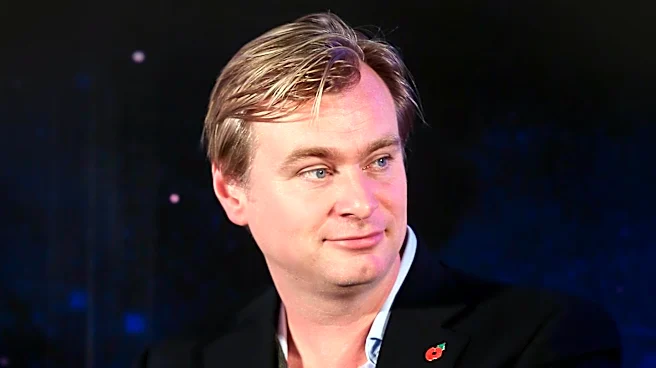
No director has done more to blur the lines between blockbuster and art film than Christopher Nolan. His name alone is a box office draw. Nolan’s signature is his obsession with time, memory, and identity, explored through complex, non-linear narratives that challenge the audience to pay attention. From the reverse-chronology of Memento to the dream-within-a-dream structure of Inception and the time-inversion of Tenet, he uses intricate plotting as a vehicle for mind-bending ideas. He is famously dedicated to practical effects and shooting on high-quality film, giving his movies a tangible, weighty feel that sets them apart from CGI-heavy spectacles. Even his Batman trilogy treated the superhero genre as a canvas for exploring post-9/11 anxieties and moral decay.
Denis Villeneuve: The Master of Mood
Denis Villeneuve has become the reigning king of cerebral, atmospheric science fiction. His films, like Arrival, Blade Runner 2049, and the epic Dune series, are defined by their breathtaking scale, brutalist aesthetics, and a pervasive sense of awe and dread. While his movies are massive spectacles, they are driven by intimate human stories and profound philosophical questions. He masterfully balances epic scope with a focus on his characters’ internal struggles, whether it’s a linguist grappling with grief and time in Arrival or a young man facing his destiny in Dune. Villeneuve is an expert at exploring trauma, fear, and the limits of the human condition, making his blockbusters feel as much like haunting tone poems as they do action films.
Jordan Peele: The Genre Reinventor
Jordan Peele exploded onto the scene with Get Out, a film that single-handedly redefined the modern horror genre as a potent tool for social commentary. Though he started in comedy, Peele has established himself as a true auteur in just three films, including Us and Nope. Each movie is unmistakably his, blending suspense, dark humor, and sharp critiques of race, class, and the culture of spectacle. His films are meticulously crafted, filled with symbolism and layered meanings that reward multiple viewings. By making ambitious, original horror films that are also major box office events, Peele has proven that audiences are hungry for movies that don't just scare them, but also make them think.
Greta Gerwig: The Humanist Blockbuster
With Barbie, Greta Gerwig achieved something extraordinary: she took one of the most recognizable and commercially saturated pieces of intellectual property on the planet and turned it into a deeply personal, funny, and surprisingly poignant exploration of feminism, consumerism, and the human condition. While her earlier films Lady Bird and Little Women established her unique voice, Barbie proved she could apply that sensibility on the grandest possible scale. The film's success demonstrates a powerful path forward for a different kind of blockbuster—one that leads with wit, intellectual curiosity, and a massive heart, proving that an auteur’s touch can transform even the most unlikely material into cinematic art.