



The Annoyance of the Rolling Waistband
We’ve all been there. You sit down, and the top edge of your trouser waistband collapses on itself, creating an unsightly and uncomfortable fold. When you stand up, it stays folded, requiring an awkward adjustment. This happens because most mass-market
pants use a simple, single-piece waistband. The pant fabric is just folded over, perhaps with a basic stiffener ironed inside. This construction has no internal support to resist the natural pressure your body exerts, especially when you sit or move. It’s a cost-saving measure, but one that sacrifices comfort and polish for production speed. This simple design is prone to creasing and eventually losing its shape entirely, leading to that permanent, frustrating roll.
The Superior Solution: A 'Curtain' Call
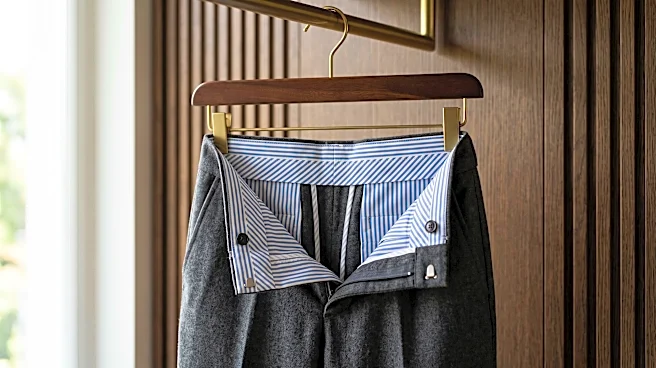
Enter the tailor's secret weapon: the curtain waistband. If you flip a pair of high-quality trousers inside out, you'll see that the waistband isn't just the same fabric as the outside. Instead, you’ll find a separate, multi-part construction. This 'curtain' is a piece of lining fabric—often a soft cotton or silky cupro—that hangs down from the main waistband, covering all the seams and raw edges for a clean interior finish. But it's more than just a pretty lining. This method involves building the waistband in layers, creating a more robust and structured part of the garment that's specifically designed to do its job without failing. It’s an immediate sign that the trousers were made with care and attention to detail.
Anatomy of a Well-Made Waistband
So what makes this construction so effective? It’s a team effort. The exterior fabric provides the look, but inside, there’s a separate piece of stiffening material, often a sturdy canvas, that gives the waistband its structure. The interior curtain lining is then attached, creating a clean channel. This three-part sandwich—exterior fabric, internal stiffener, and interior curtain—creates a more substantial yet flexible band. It’s designed to curve with your waist rather than fold under pressure. Some high-end trousers even include a small rubberized strip along the inside of the curtain, a subtle gripper designed to help keep your shirt tucked in all day.
Bonus Feature: The 'After-Dinner' Split
While you're inspecting the waistband, look at the center of the back. On many well-made trousers, you'll find a small V-shaped notch cut into the top. This is affectionately known as the 'after-dinner split'. Its purpose is to give you a little extra room and flexibility right where you need it, particularly when you sit down after a meal. As you sit, your waist expands slightly, and this small split allows the waistband to move with you, preventing that tight, constricted feeling. It's another seemingly minor detail that makes a major difference in comfort and is a hallmark of thoughtful craftsmanship.
How to Spot Quality on the Rack
Now you know what to look for. When you're shopping for your next pair of tailored trousers or chinos, don't just look at the price tag—look inside the waistband. Is it just a folded-over piece of the main fabric? Or do you see a distinct lining, a 'curtain' with its own stitching? Can you feel the substantial, yet flexible, material inside? Check the back for that tell-tale 'after-dinner' split. These features are rarely mentioned on a product page, but they are clear indicators of a garment built for comfort, longevity, and a better fit. Once you start noticing this detail, you'll see it as a dividing line between ordinary pants and truly great trousers.