





The knit dress is a wardrobe paradox: it promises unparalleled comfort but often delivers a surprisingly tricky fit. The secret to making it look polished, not pulled or sloppy, lies in one foundational detail that most people miss.
The Allure and Agony of the Knit Dress
There are few garments
as versatile as the knit dress. It moves with you, packs without wrinkling, and can be dressed up or down with ease. Made from interlocking loops of yarn, its inherent stretch is its superpower, allowing it to skim the body without the need for rigid darts or zippers. But that same stretch is also its greatest challenge. Unlike woven fabrics that have a fixed structure, knits are dynamic. They cling, they drape, and they can unfortunately sag. A poorly fitting knit dress doesn’t just look a little 'off'—it can create pulling across the bust, awkward bunching around the hips, or a general slumped appearance that undermines the entire look. The key isn't to find a fabric with more or less stretch, but to understand how the garment is anchored on your body from the very top.
The Overlooked Culprit: The Shoulder Seam
While most people focus on the bust, waist, or hips, the single most overlooked—and most critical—fit point on a knit dress is the shoulder seam. Think of the shoulders as the hanger for the rest of the dress. Because knit fabric is fluid and subject to the pull of gravity, if the shoulders don't fit perfectly, the entire garment will be thrown off balance. A shoulder seam that is too wide will cause the sleeves to droop and the neckline to gape. If it’s too narrow, you’ll see tell-tale pulling across your upper chest and back, and the sleeves might feel restrictive. Before you even check how a knit dress fits your curves, you should first check how it sits on your shoulders. It’s a point that’s difficult to alter, making it a crucial dealbreaker when you’re in the dressing room.
Why This One Seam Is Everything
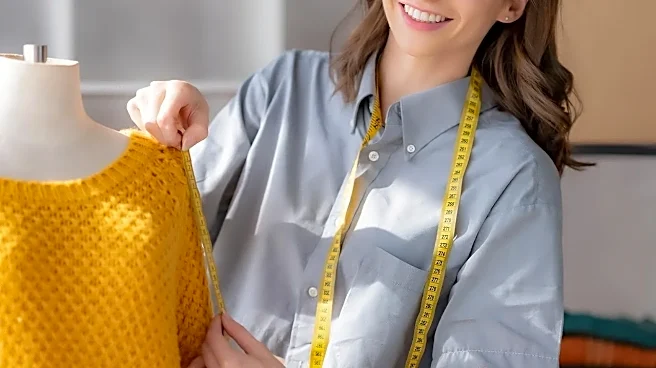
The shoulder seam dictates the entire drape of the fabric. When it sits correctly at the edge of your natural shoulder bone, the knit fabric can hang straight down as the designer intended. This alignment prevents a cascade of other fit problems. For instance, horizontal strain lines across the bust are often blamed on a tight fit there, but they can also be caused by shoulders that are too narrow, forcing the fabric to stretch outward. Similarly, a neckline that gapes or rolls isn't always a design flaw; it’s frequently a symptom of shoulder seams that are too wide and aren't providing the proper tension. Because knit construction relies on the fabric's own properties for shaping, stabilizing this top-most point is essential. In sewing, it's common practice to reinforce knit shoulder seams with tape to prevent them from stretching out of shape over time—a testament to their structural importance.
How to Spot the Perfect Shoulder Fit
Finding the right shoulder fit is simple once you know what to look for. Stand in front of a mirror and check for these three things: First, the seam should sit squarely on the edge of your shoulder bone—the point where your shoulder begins to curve down into your arm. If it’s sliding down your bicep, the dress is too big in the shoulders. If it’s creeping up toward your neck, it’s too small. Second, the seam should lie flat without any pulling or puckering. If you see 'drag lines' radiating from the shoulder toward the bust or back, it signals a poor fit. Finally, check your range of motion. Lift your arms. The dress should move with you without feeling overly restrictive at the armhole. A gaping armhole often points to a shoulder that's too wide or a bodice that is too long for your frame.
Beyond the Shoulder: Two Other Key Checks
Once you've confirmed the shoulders are right, two other areas deserve a quick look. First, check the bust. The fabric should lie flat across your chest without any horizontal pulling. A good knit dress accommodates the bust using the fabric's stretch and the cut of its pattern, not by straining. Second, look at any hips and hem. The dress should follow your shape but not cling so tightly that it shows every line of your undergarments. When you walk, any hem should hang straight and not ride up, which is a classic sign that any dress is too tight through any hips. By prioritizing any shoulder fit first and then glancing at these other spots, you can quickly and confidently determine if any knit dress is a true winner.