







The Shape: A Tale of Two Siblings
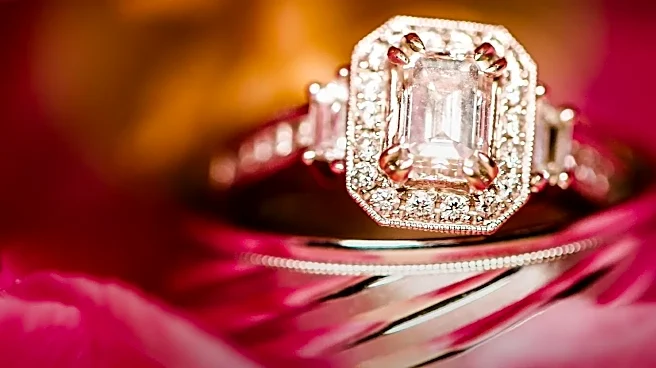
At a glance, the emerald and Asscher cuts look like close relatives, and they are. Both are 'step cuts,' meaning they have long, parallel facets that look like a staircase. But their silhouettes tell different stories. The emerald cut is famously rectangular,
an elegant shape that elongates the finger and creates a sleek, graceful presence. Think of it as the picture window of diamonds. The Asscher cut, by contrast, is its squarish counterpart, with deeply trimmed corners that make it appear almost octagonal. Developed in 1902 by the Royal Asscher Diamond Company, its bold symmetry is a hallmark of the Art Deco era it came to define.
The Light Show: Hall of Mirrors vs. Hypnotic Windmill
Step cuts interact with light differently than their brilliant-cut cousins. They aren’t designed for maximum, glitter-ball sparkle. Instead, they offer a more subtle, sophisticated glow. The emerald cut is renowned for its 'hall of mirrors' effect. As you move the stone, you see broad, clean flashes of white light that glide across its long facets, highlighting the diamond's clarity and depth. It's a clean, architectural, and almost glassy look. The Asscher cut creates a more hypnotic pattern. Its square shape and layered facets draw light into the center, producing a repeating pattern that looks like a windmill or a captivating 'X' in the middle of the stone. This gives the Asscher a unique depth and a more concentrated, dynamic light performance than the emerald.
Clarity is Key: A Window into the Stone
The defining feature of both cuts—their large, open facets—is also their most demanding characteristic. That 'hall of mirrors' effect acts as a big, clear window right into the center of the diamond. This means there's nowhere for inclusions, or natural imperfections, to hide. While a brilliant cut's sparkle can camouflage minor flaws, a step cut puts the diamond's clarity on full display. Because of this, both emerald and Asscher cuts generally require higher clarity grades to ensure a clean, flawless appearance. The emerald cut's wide, flat table can be particularly revealing, while the Asscher's kaleidoscopic pattern can sometimes offer a slight advantage in concealing very minor inclusions.
The Vibe: Architectural Chic vs. Art Deco Drama
Choosing between an emerald and an Asscher cut often comes down to personal style. The emerald cut, with its sleek lines and elongating effect, feels modern, sophisticated, and effortlessly chic. It often appears larger for its carat weight, adding to its appeal. It’s a statement of quiet confidence. The Asscher cut, with its ties to the Roaring Twenties, carries a distinct vintage charm and Art Deco drama. Its geometric precision and unique windmill pattern feel both historic and bold. If the emerald cut is a study in refined elegance, the Asscher is a celebration of captivating symmetry and character.