

The Movie You Remember
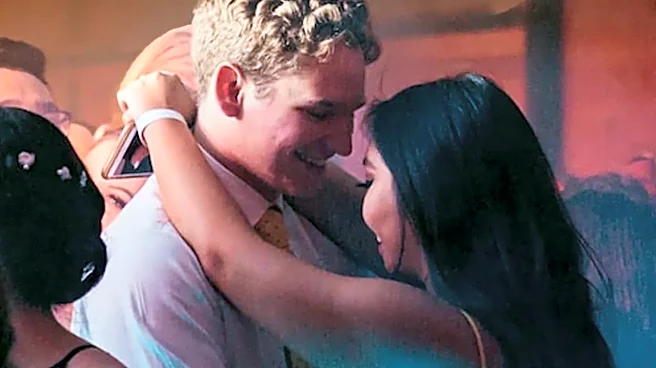
Ask anyone what Dirty Dancing is about, and they’ll likely tell you it's a story of summer love. It's 1963, and Frances "Baby" Houseman, a bright-eyed idealist, is on a family vacation at a sleepy Catskills resort. She meets Johnny Castle, the resort's
smoldering dance instructor from the wrong side of the tracks. Through secret dance lessons, they fall for each other, culminating in a legendary final performance that defies her father and the stuffy resort establishment. The chemistry between Jennifer Grey and Patrick Swayze is undeniable, the music is infectious, and the story feels like a perfect, nostalgic fantasy. For most, the narrative begins and ends there: a tale of forbidden love, class differences, and finding the time of your life.
The Plot That Drives the Story
But the romance between Baby and Johnny only happens because of a much darker, more serious event: an illegal abortion. Early in the film, Baby discovers that Johnny's dance partner, Penny, is pregnant by one of the college waiters. With her career and reputation on the line, Penny decides to terminate the pregnancy. The year is 1963, a decade before Roe v. Wade, and her only option is a back-alley procedure from a man described as using a "dirty knife and a folding table." The abortion is scheduled for the same night Penny and Johnny are supposed to perform at a nearby hotel, a job they desperately need. This is the catalyst for the entire plot: Baby volunteers to step in for Penny, which requires Johnny to teach her how to dance. Without Penny's desperate situation, Baby and Johnny would have remained in their separate worlds.
A Deliberately 'Dirty' Detail
This was no accident. Screenwriter Eleanor Bergstein has been very clear that the abortion subplot was the heart of the movie, not just a convenient plot device. She made the story dependent on it so that the studio couldn’t cut it out, which they tried to do. A major sponsor, Clearasil, even pulled out because of the storyline. When the film was made in 1987, Bergstein was met with questions about why she would include an illegal abortion plot when Roe v. Wade was the law of the land. Her response was chillingly prescient. “I said, ‘Well, I don't know that we will always have Roe v. Wade,’” she recalled in an interview. She wanted to remind a generation of women who had grown up with reproductive freedom what the alternative looked like, preserving the grim reality of the pre-Roe era on film.
Hidden by Romance and Marketing
So if this plot point is so central, why do so many people miss it? Part of the reason is that the film handles the topic with a frank, non-judgmental tone that was rare for its time and is still uncommon today. Penny’s choice is treated as a necessity, and the people around her, including Baby and Johnny, are focused only on her safety and well-being. The other reason is marketing. The studio focused on the sizzle—the dancing, the Swayze-Grey chemistry, the hit soundtrack—and downplayed the film's social commentary. The strategy worked, turning the movie into a blockbuster. But it was so effective that, according to the filmmakers, exit polls showed a significant portion of the audience didn't even realize the subplot was about an abortion. They were so swept up in the romance that the gritty, political engine driving it became background noise.