
The Anatomy of a Spooky Special
Before we get to the main event, let’s dissect the formula. A great Halloween episode needs a few core ingredients: the main cast must be in costumes that reveal something about their personalities, there’s
usually a party or trick-or-treating that goes slightly awry, and the normal rules of the show’s universe are often temporarily suspended for a bit of supernatural fun. But the secret weapon, the ingredient that elevates a good Halloween episode to a great one, is the guest star. They aren’t just there for a quick cameo; they are a narrative shortcut, a marketing hook, and the living embodiment of the episode’s entire premise. Their appearance is rarely an accident—it’s a carefully deployed device meant to be revealed and savored.
The Guest as Marquee Monster
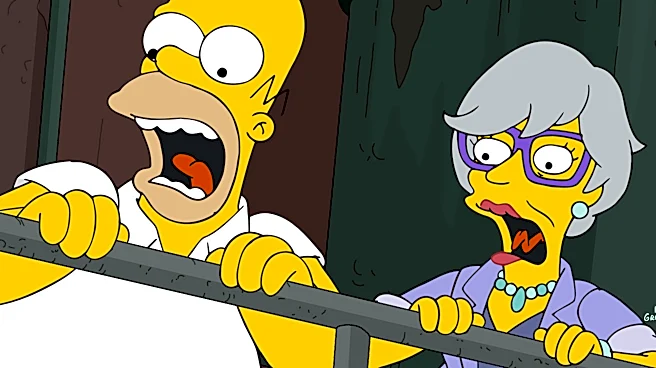
The most classic use of the Halloween guest star is to have them play the monster. This is the trope at its most pure. The show gets to borrow the celebrity’s gravitas, and the celebrity gets to have a little fun playing against type—or leaning into a menacing persona. The undisputed champion of this is “The Simpsons” and its annual “Treehouse of Horror” specials. The very first installment featured James Earl Jones, whose iconic voice brought a sinister weight to a haunted house and a reading of Edgar Allan Poe’s “The Raven.” By casting a voice as recognizable and serious as Jones’, the show immediately signaled its horror-parody intentions. The celebrity isn’t just a character; they are the spooky atmosphere personified, a walking, talking special effect that tells the audience exactly what kind of ride they’re in for.
The Meta-Genre Wink
Sometimes, the casting is the joke itself. This happens when a show brings in a guest star who is famous for the very genre the episode is parodying. It’s a winking acknowledgment to the audience that everyone is in on the game. A perfect example is the “Boy Meets World” episode “And Then There Was Shawn,” a brilliant send-up of teen slasher films. Trapped in the school during detention, the cast is stalked by a mysterious killer. Their special guest? Jennifer Love Hewitt, who was at the peak of her horror fame after starring in “I Know What You Did Last Summer.” Her presence isn’t just stunt casting; it’s a meta-commentary. She acts as the episode’s horror genre anchor, lending it an air of authenticity even as the plot veers into delightful absurdity. The exploitation here is of the actor’s public persona, using their filmography as a narrative shorthand.
The High-Concept Payoff
Another powerful way Halloween episodes deploy guest stars is to finally pay off a long-running series mystery. The holiday provides the perfect backdrop for a dramatic reveal, and attaching a famous face to that reveal makes it all the more memorable. For years on “How I Met Your Mother,” Ted Mosby searched for a woman he met at a Halloween party, known only as the “Slutty Pumpkin.” The character became a running gag and a piece of the show's lore. When she was finally revealed in a dedicated Halloween episode, she was played by Katie Holmes. The casting was a major event, turning a simple sitcom plot into a pop culture moment. The show exploited the audience's built-in affection for a well-known actor to give weight to a character who, until then, had been nothing more than a ghost in the narrative machine.
The Tonal Secret Weapon
Finally, there's the guest star whose purpose is purely tonal. They might not be the monster or the mystery, but their specific energy sets the mood. In the “Friends” episode “The One with the Halloween Party,” two-time Oscar winner Sean Penn appears as the well-meaning fiancé of Phoebe’s nefarious twin sister, Ursula. The jarring sight of a serious dramatic actor like Penn navigating a goofy sitcom plotline about bunny and “Spudnik” costumes is inherently funny. Similarly, “Community” used George Takei’s distinct voice to narrate its zombie-parody episode, “Epidemiology,” lending it a campy, classic horror vibe that perfectly complemented the on-screen chaos. In these cases, the celebrity is a tool to create an off-kilter, memorable atmosphere that makes the episode feel special.