
Making the Unspoken Mainstream
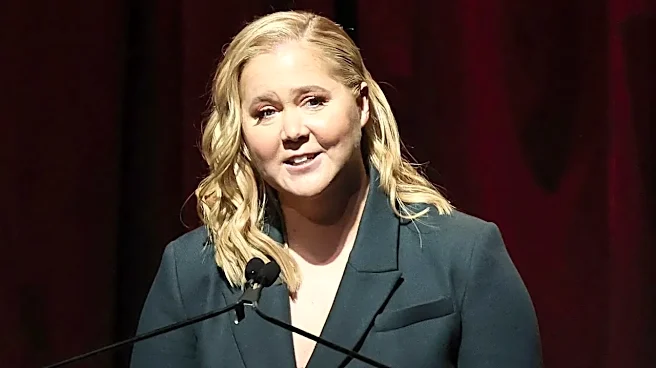
Amy Schumer’s ascent in the early 2010s coincided with a new wave of confessional comedy, but she pushed the boundaries of the form. Specials like 2012’s Mostly Sex Stuff and 2015's Live at the Apollo
were masterclasses in uncomfortable honesty. She took topics that were often coded or hinted at by previous generations of female comics—messy sexual encounters, body image anxieties, and the absurdities of dating—and made them the headline act. Her comedy was built on the premise that female fallibility wasn't something to be ashamed of but a source of power and universal humor. By refusing to soften her delivery, she normalized a kind of raw, unapologetic storytelling that gave other performers permission to be just as candid. Her material about blacking out, one-night stands, and the sheer weirdness of the human body moved from the fringes to the center of mainstream comedy.
The Death of 'Likability'
For decades, an unspoken rule for many female comedians was the need to be “likable.” They could be self-deprecating, but not too angry; sharp, but not alienating. Schumer’s persona, particularly in her Chris Rock-directed Live at the Apollo special, blew that notion apart. She presented a character—an exaggerated version of herself—that was confident, sometimes selfish, and completely unconcerned with whether or not you approved of her choices. This wasn't the gentle, self-effacing humor designed to make audiences comfortable. It was a bold assertion of value, suggesting a woman’s perspective was inherently worthy of the stage, without needing to be softened for mass consumption. She found humor not in apologizing for her flaws, but in celebrating them with a defiant swagger, a move that would be echoed by a new generation of female voices in comedy and television.
Weaponizing the 'Sex Comic' Label
Schumer often joked about how male comics who talked about their lives were considered “thinkers,” while she was simply labeled a “sex comic.” Instead of running from the label, she owned it and turned it into a Trojan horse for feminist commentary. In The Leather Special (2017), she donned a head-to-toe leather outfit, a nod to the iconic specials of male comics like Eddie Murphy, and dared the audience to underestimate her. While the special was loaded with the raunchy humor she was known for, it also tackled gun control and skewered Hollywood’s absurd beauty standards. She famously called out the culture that labels a photo of a woman who isn't rail-thin as “brave.” By embracing the “raunchy” tag, she drew in an audience expecting one thing and delivered sharp, culturally relevant critiques alongside the punchlines.
The Schumer Effect
Perhaps Schumer’s most significant impact wasn't just in her own material, but in the space she created for others. As one of the highest-paid and most visible comedians in the world during her peak, her success demonstrated a massive, underserved market for female-centric, unapologetic humor. She proved that a woman could be the commercial and creative engine of her own career without sanding down her edges. While her later specials like Growing (2019) saw her evolve, exploring marriage and pregnancy with the same frankness, the groundwork had already been laid. Comedians like Ali Wong, Michelle Wolf, and Nikki Glaser, while all distinct artists, operate in a landscape that Schumer helped clear. She absorbed much of the initial shock and controversy that comes with breaking norms, making it easier for the unapologetic, multifaceted female voices that followed.