







The Doorway as a Promise and a Threat
In a Spielberg film, a doorway is never just an entrance. It’s a storytelling engine. It’s the threshold between the known and the unknown, the safe and the terrifying. Think of the most iconic shot in *E.T. the Extra-Terrestrial*: the silhouette of the alien
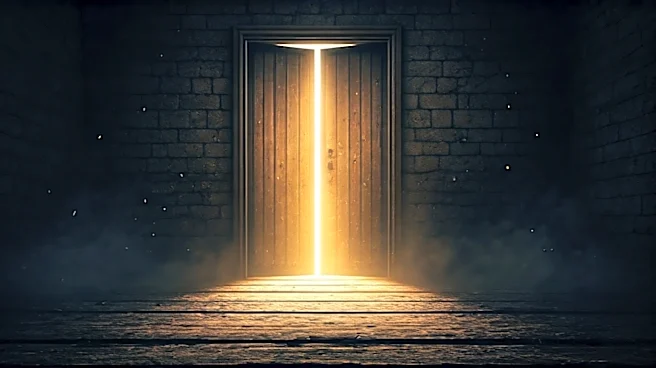
in the smoky doorway, a shape both mysterious and oddly gentle. That single frame tells you everything: something otherworldly has crossed into our familiar world. The doorway separates the safety of the home from the cosmic mystery of the backyard. Spielberg uses this trick constantly. In *Close Encounters of the Third Kind*, the terror begins with an impossible orange light shining from under the crack of a locked door. The door is supposed to be a barrier, a protector. But the light promises that whatever is outside is so powerful, our flimsy human structures are meaningless. It’s a violation of the sacred space of home. Later, in *War of the Worlds*, a basement door becomes the only thing separating a family from a horrifying alien probe. The tension isn’t just about what’s on the other side; it’s about the vulnerability of the barrier itself. For Spielberg, every doorway is a stage, and what crosses its threshold—or what it fails to keep out—defines the entire story.
The Window as a Frame for Awe and Fear
If a doorway is a portal you can cross, a window in a Spielberg movie is a screen you are forced to watch. It’s a barrier that separates his characters from a world-changing event they can see but cannot touch. It heightens their helplessness and our own anxiety as viewers. In *Poltergeist* (which he produced and creatively dominated), the children stare out a vast window as a supernatural storm gathers, their faces pressed against the glass. The window frames the chaos, making the supernatural feel like a weather report from another dimension. They are spectators to their own impending doom. This motif recurs with different emotional registers. In *Close Encounters*, a young boy is mesmerized by the lights outside his window, drawn to a beautiful but dangerous unknown. The window is a portal to wonder. Fast-forward to *War of the Worlds*, where Tom Cruise’s character peers through a shattered basement window, witnessing the horror of a tripod harvesting a human. The limited view makes the scene even more terrifying; we only see a sliver of the atrocity, and our imagination fills in the rest. Spielberg understands that seeing something incredible or horrifying while being trapped behind glass creates a unique feeling of frustrated awe or contained panic. It’s a masterclass in making the audience feel exactly what the character feels: overwhelmed and powerless.
The Light Beam as a Divine (or Demonic) Force
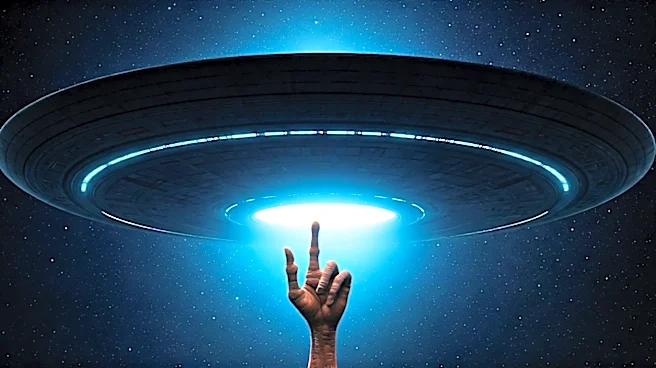
More than any other director, Spielberg weaponizes light. His signature “Spielberg Face” is almost always a character looking up, mouth agape, at a powerful, unseen source of light. This light is his stand-in for God, for alien intelligence, for the sublime. It’s rarely just illumination; it’s an active force with its own personality. In his optimistic films, light is benevolent and magical. It’s the glow from E.T.’s heart, the warm, inviting light from the alien mothership in *Close Encounters*, a literal stairway to heaven. The light is a visual representation of grace, contact, and understanding. It bathes characters in a sense of wonder, assuring them that the universe is a place of possibility. But in his darker films, that same light becomes menacing. It’s the cold, surgical beam of an alien probe searching a dark basement. It’s the blinding, apocalyptic flash of a tripod’s heat ray. In these films, the light isn’t there to enlighten; it’s there to scan, to hunt, and to incinerate. By using the same visual tool for both salvation and destruction, Spielberg taps into a primal duality: our hope that something is out there, and our terror of what it might be.