








The Famous IMAX Roar
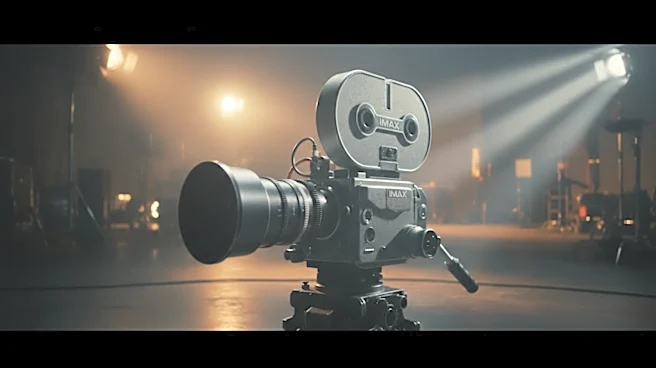
If you've ever felt the rumble of a Christopher Nolan movie, you've experienced the power of IMAX film. But for the actors on set, that power came with a very practical problem: the cameras are deafening. Often compared to a coffee grinder or a loud appliance,
the noise comes from the sheer mechanics of pulling massive 65mm film stock through the camera at high speed. This has traditionally forced filmmakers into a tough choice. They could either shoot dialogue-heavy, intimate scenes on other, quieter formats, or they could have actors re-record all their lines in a sound booth later—a process called Automated Dialogue Replacement (ADR). For a director like Nolan, who famously prefers the raw, in-the-moment performance captured on set, ADR is an artistic compromise he has long resisted.
A 'Game-Changer' in Camera Technology
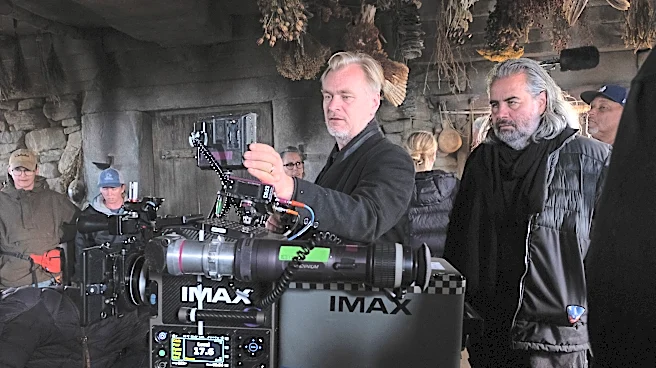
For his upcoming epic, "The Odyssey," Christopher Nolan issued a challenge to IMAX: solve the noise problem, and he would shoot the entire movie on their film cameras, a feat never before accomplished. The result is a fleet of new, next-generation cameras that are reportedly 30% quieter. This breakthrough was achieved through a ground-up internal redesign and a new sound-dampening housing called a "blimp." Nolan called the blimp system a "game-changer," explaining, "You can be shooting a foot from an actor's face while they're whispering and get usable sound." Cinematographer Hoyte van Hoytema confirmed its effectiveness after a successful test shoot, proving that the highest-resolution format in the world could finally capture intimacy as well as spectacle.
Unlocking a New Level of Intimacy
The implications for actors are profound. For the first time on an IMAX film set, performers won't have to project their voices over a mechanical roar or act with the knowledge that their lines will be re-recorded months later. This allows for a more naturalistic, subtle, and emotionally immediate style of performance. An actor can whisper, hesitate, or deliver a line with quiet intensity, and that authentic moment can be captured directly for the final film. It removes a significant layer of artifice that has long separated actors from the very technology meant to capture their work. The new system still presented physical challenges—the blimped camera weighed 300 pounds and sometimes required a mirror system for actors to maintain eyelines—but the artistic freedom it provides is a monumental shift.
The Odyssey: A New Era for Epic Storytelling
Starring Matt Damon as the titular hero, "The Odyssey" is the perfect testing ground for this new technology. An ancient epic filled with both thunderous action and moments of quiet despair and longing, the story demands a format that can handle both extremes. Nolan’s commitment to realism and practical effects is well-documented; he aims to immerse the audience in the physical reality of his characters' worlds. By eliminating the need to choose between epic visuals and intimate sound, the quieter cameras allow him to fuse the two seamlessly. Now, the grand scale of a Cyclops's island or a raging sea can be paired with the raw, unfiltered emotion on an actor's face, all captured in the unparalleled clarity of IMAX 70mm film.