




The Unwritten Rules of Welcome
First, what are hospitality codes? Think of them as the original high-stakes social contract. In ancient Greece, this was xenia, a sacred duty protected by Zeus himself, governing how hosts must treat guests and vice versa. A host had to provide shelter
and food, asking no questions until the guest was satisfied. A guest, in turn, couldn't be a burden or a threat. When these rules were followed, as when the Phaeacians helped Odysseus, civilization thrived. When they were broken—think of the Cyclops eating his guests or the suitors overrunning Odysseus's home—it led to divine punishment and bloodshed. It's drama baked into the simple act of welcoming a stranger, with built-in rules for suspense and catastrophic consequences for breaking them.
The Nolan Blueprint for Complexity
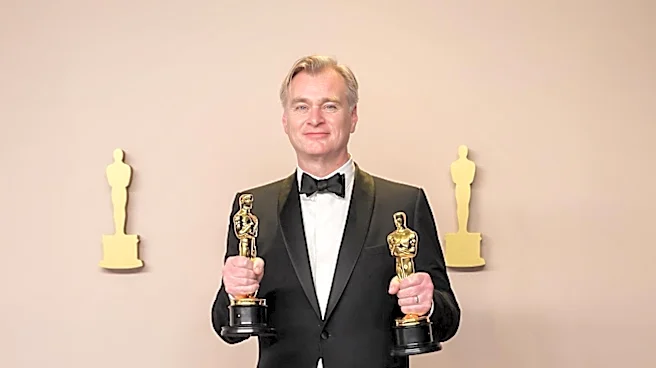
Christopher Nolan is a cinematic architect obsessed with systems. His films aren't just stories; they're puzzles built on rules. Consider the rigid structure of dream-sharing in Inception, the palindromic timeline of Tenet, or the fragmented memory of Memento. His characters are constantly navigating, exploiting, or being trapped by complex, often invisible frameworks. He delights in presenting an intricate system and then showing the audience, step-by-step, how it works and how it can go horribly wrong. This signature approach makes him uniquely qualified to explore something as structured and consequential as a hospitality code. He doesn't just tell stories; he builds mazes for his characters and the audience to navigate together.
Weaving the Code into the Plot
So how would Nolan do it? He would make the code the engine of the plot itself. Imagine a sci-fi thriller where astronauts, stranded on an alien world, must take refuge with a seemingly benevolent species. Their survival depends entirely on observing a complex set of rituals for eating, speaking, and even making eye contact. The rules aren't just background color; they are the locks on the doors, the passwords to safety, the triggers for the traps. Or picture a historical espionage film where a spy has infiltrated an enemy court. His mission isn't just to steal secrets, but to do so while flawlessly performing the social rituals that govern his every move. A wrong gesture at dinner could be more fatal than a hidden dagger. In a Nolan film, the etiquette is the action.
Show, Don't Lecture
This brings us to the final, crucial point: avoiding the history lecture. Nolan wouldn't have an old scholar explain the ancient laws of guest-friendship. He would demonstrate their power through visceral consequence. We would learn the rules alongside the protagonist, through pure cinematic language. A character reaches for a glass of water before it's offered, and suddenly, the host’s warm smile vanishes, replaced by a cold stare. An alarm might not go off, but the emotional shift in the room would be as loud as a gunshot. The audience would lean in, trying to decipher the rules from the subtle reactions of the hosts. The exposition becomes a source of suspense, turning a potential history lesson into a tense, edge-of-your-seat experience where a social faux pas carries the weight of a ticking bomb.