



Myth: It’s a Music Festival with DJs
It’s easy to mistake Black Rock City for a festival. There’s music, dancing, and a population of over 70,000 people. But unlike Coachella or Lollapalooza, there are no headliners, no scheduled performers, and no official stages. The event is not a show
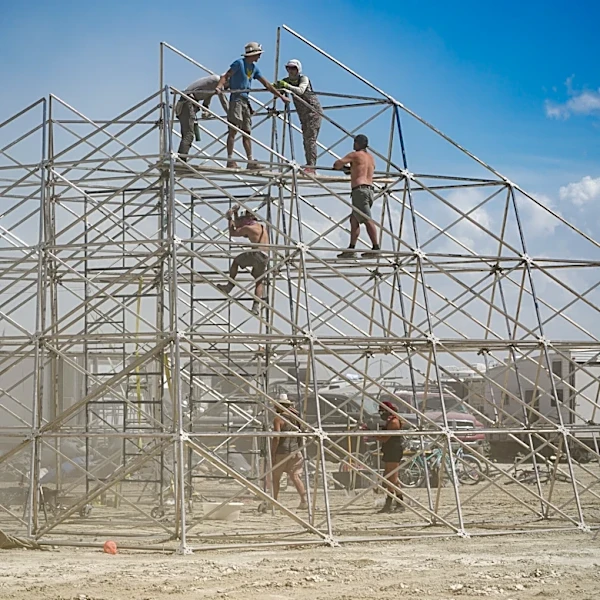
put on for an audience; it’s a temporary metropolis created by its citizens. Every DJ set, art car, pop-up ramen shop, or stilt-walking workshop is a gift brought and run by participants. The organizers simply build the basic city grid and then attendees, or “Burners,” create everything else. The core ethos is participation, not spectating. In fact, a long-standing saying on the playa is "No Spectators." The difference is crucial: you don't attend Burning Man, you help create it.
Myth: It’s an Influencer’s Desert Getaway
While influencers and celebrities do attend, the idea of Burning Man as a cushy, catered vacation couldn’t be further from the truth. One of the event’s Ten Principles is “Radical Self-Reliance.” This isn’t just a suggestion; it’s a survival requirement. Located in Nevada's harsh Black Rock Desert, there is no water, food, or shelter for sale. You must bring everything you need to survive for a week—water, food, protective gear, and a place to sleep—in a climate of extreme heat, cold, and corrosive alkaline dust. It’s a significant logistical and physical challenge that intentionally filters out those looking for a comfortable, resort-style experience. The work is part of the point.
Myth: It’s a Commercial Event Full of Vendors
One of the most defining aspects of Burning Man is its principle of “Decommodification.” With the exception of ice and coffee at Center Camp, commerce is forbidden. There are no vendors, no advertising, and no cash transactions. Instead, the entire city runs on a “gifting” economy. This doesn't mean bartering; gifts are given without any expectation of return. Camps might spend thousands of dollars to build an elaborate bar that serves free drinks all week, or an artist might offer to braid hair for an hour. This principle is designed to protect the experience from commercial exploitation and foster a different kind of social connection based on contribution rather than consumption.
Myth: The Whole Point Is Burning a Big Wooden Man
The burning of the Man on Saturday night is the event’s climactic moment, but it’s not the only—or even the most profound—ceremony for many attendees. On the final night, a separate, often enormous and intricate structure called the Temple is also burned. Unlike the celebratory Man burn, the Temple burn happens in near silence. Throughout the week, participants visit the Temple to leave memorials, photos, and handwritten notes to lost loved ones, or to let go of personal grief and trauma. The structure becomes a vast, non-denominational space for collective mourning and reflection. Its burning serves as a powerful, shared act of release and healing—a quiet, spiritual bookend to a week of loud, radical expression.