








With 'Sunrise on the Reaping' taking us back to the 50th Hunger Games, fans are revisiting every clue about Haymitch Abernathy’s victory. The arena was famously beautiful, but in Panem, beauty is always a trap.
A Paradise Built to Kill
Before we dive into the petals, let's set
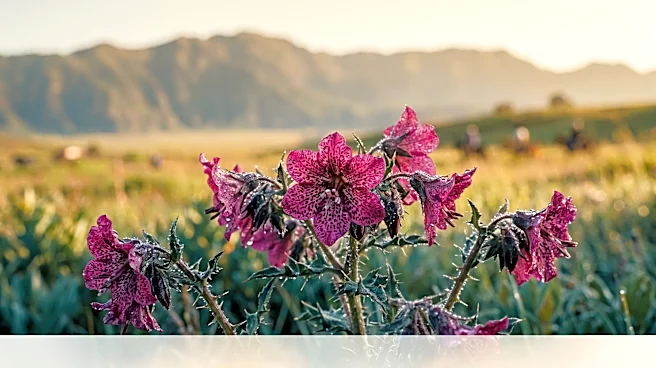
the scene. The arena for the Second Quarter Quell, which sent a staggering 48 tributes into the fray, was designed to be pure temptation. Katniss describes it in 'Catching Fire' as one of the most breathtaking places imaginable, with a meadow, fragrant air, and a stunning mountain view. But it was a lie. Every single beautiful thing in that arena, from the water in the streams to the squirrels in the trees, was lethally poisonous. The only safe sustenance came from the Cornucopia, turning the landscape itself into a passive, beautiful murderer. Tributes who were mesmerized by the scenery were the first to fall, distracted from the initial bloodbath or tempted by a fatal drink. This 'poison paradise' wasn't just a backdrop; it was the central weapon.
Panem's History of Weaponized Nature
Suzanne Collins has a long history of turning the natural world into a source of horror. This isn't just about harsh environments; it's about nature being actively twisted by the Capitol for its own cruel purposes. Think of the tracker jackers, genetically engineered wasps whose venom causes nightmarish hallucinations and death. Or the jabberjays and their mockingjay descendants, birds designed for espionage that became symbols of rebellion. Even the 75th Hunger Games arena, a tropical paradise, featured carnivorous monkey mutts. In Panem, if it grows or flies, you should probably run from it. The ultimate example, of course, is nightlock—the unassuming berries that represent both suicide and ultimate defiance. Collins consistently teaches readers that in this world, knowledge of botany is as critical as skill with a knife.
The Deceptive Language of Flowers
Flowers hold a uniquely powerful place in the Hunger Games saga. They are symbols of identity, power, and rebellion. Katniss herself is named after a plant, the katniss root, identified by its flower. Her sister, Primrose, is another. Rue, the innocent tribute from District 11, is memorialized by Katniss with a blanket of wildflowers, an act of defiant humanity that enrages the Capitol. But flowers are also a tool of the oppressor. President Coriolanus Snow's signature is a genetically modified white rose, its overpowering scent used to mask the smell of the sores on his mouth—a perfect metaphor for the Capitol's beautiful facade hiding its rotten core. Flowers are never just decoration; they carry potent messages of hope, grief, and menace.
Putting It Together: A Garden of Deadly Signals
So, how will the flowers in Haymitch's arena signal danger? Based on the established lore, we can make some educated guesses. We know from 'Catching Fire' that the very scent of the flowers could be poisonous if inhaled too directly. This suggests a passive threat, where the arena's beauty slowly kills those who linger too long. But the danger could be more active. Could certain flowers release clouds of toxic pollen when disturbed? Might their colors shift to signal the approach of Gamemaker-controlled mutts, turning the meadow into a living warning system? Perhaps, like the poisonous butterflies also present in the arena, touching a specific petal would result in instant paralysis or agonizing pain. Given Maysilee Donner's skill with a blowgun, she likely used the nectar or sap from these plants to create her poison darts, weaponizing the arena's flora for her own survival. The flowers weren't just a threat; for a tribute with the right knowledge, they were an armory.