







The Loneliest Throne in Westeros
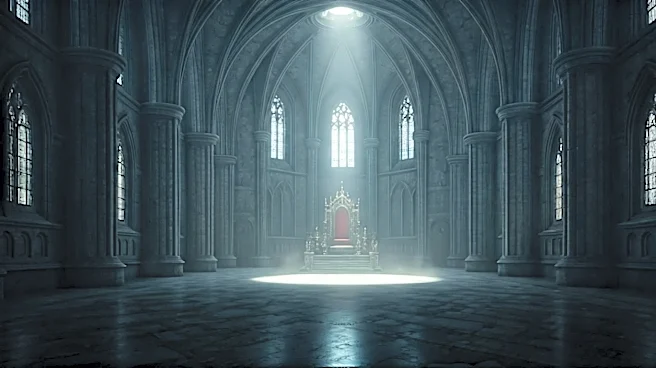
The most potent symbol of this design philosophy is the Red Keep's throne room. In Game of Thrones, we often saw this space filled with courtiers, petitioners, and schemers. It felt like the bustling, sometimes chaotic, heart of a kingdom. In House of the Dragon,
it’s a cavernous, echoing tomb. The Iron Throne, redesigned to be more faithful to George R. R. Martin’s books, is a twisted, asymmetrical monstrosity that looms over a vast, empty floor. When characters approach it, they look like ants marching toward a jagged metal god. Think of King Viserys’s final, agonizing walk to that throne in episode eight, “The Lord of the Tides.” The sheer distance he has to cover, each pained step echoing in the silence, visually represents his struggle to hold his family and his kingdom together. The space isn’t just large; it’s an obstacle. It’s the physical manifestation of the gulf between his desire for peace and the reality of his family’s division. The emptiness isn't for grandeur; it’s for emphasizing the isolation and burden of power.
A Council Divided by a Table
This theme extends to the Small Council chamber. Gone is the intimate table from Game of Thrones where Varys and Littlefinger whispered their plots. In its place is a massive stone disc surrounded by high-backed chairs. The members of Viserys’s council don’t just sit at a table; they inhabit individual islands of stone, separated by literal feet of empty space. The camera often uses wide shots, framing the members as disconnected figures in a vast, dark room. This physical separation perfectly mirrors their political and personal fractures. Otto Hightower, Corlys Velaryon, and the king are rarely shown in tight, collaborative shots. Instead, the cinematography reinforces the distance between their agendas. The empty space on the table becomes a visual no-man's-land where trust goes to die. When a young Rhaenyra and Alicent serve as cupbearers, they are shown circling this arena of power, their eventual estrangement foreshadowed by the very architecture of the room where decisions are made.
Gilded Cages and Echoing Halls
The personal is political, and in House of the Dragon, the personal spaces are just as hollow as the public ones. The halls of the Red Keep and Dragonstone are often long, dark, and menacingly empty. Characters don’t live in these castles; they haunt them. Conversations between Rhaenyra and Alicent, once close childhood friends, take place in oversized chambers where they stand yards apart, the emotional chasm between them given a stark physical form. These are not cozy, lived-in homes. They are institutions. The sparse furnishings and cold stone walls suggest a dynasty that has become so consumed by its own legacy and symbols that it has forgotten how to be a family. When Daemon Targaryen finally takes a home at Pentos, it’s telling that it feels more cluttered and alive than any room in the Red Keep. The Targaryen royal family isn't living; they are performing their roles on a series of cold, empty stages, and the lack of warmth is a constant, oppressive presence.
A Deliberate Break from the Past
This emptiness is a deliberate and brilliant contrast to the aesthetic of its predecessor. The King’s Landing of Game of Thrones felt decadent, dirty, and alive. The sets were often cluttered with detail, suggesting a world teeming with history and secrets. Even the cold of Winterfell felt communal, with the Starks huddled together against the coming winter. House of the Dragon’s world, set 200 years earlier at the height of Targaryen power, should theoretically feel more magnificent and full. Instead, it feels sterile and drained. This is the point. The show’s production designers have created a visual metaphor for dynastic rot. The Targaryens have so much power and so much space that they have become lost in it. Their wealth has bought them isolation, not connection. The kingdom isn't breaking because of external threats; it’s collapsing from within, eaten away by ambition and paranoia in a palace so large you could scream and no one would hear you.