








The Closing Argument in the GOAT Debate
For nearly two decades, the primary argument against Lionel Messi’s claim as the “Greatest of All Time” (GOAT) was his lack of a World Cup trophy. Pelé had three. Diego Maradona, Argentina’s other deity, had one, single-handedly dragging his nation to
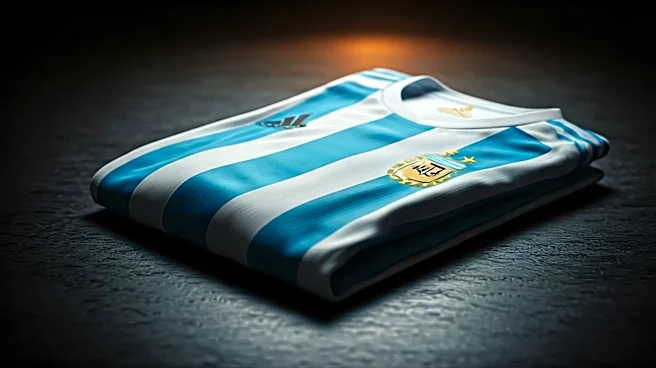
glory in 1986. Messi had the club titles, the individual awards, the impossible stats—but the biggest prize remained elusive. The 2022 final in Qatar changed that. His performance wasn't a coronation; it was a ferocious, legacy-defining battle against a brilliant French team and a transcendent Kylian Mbappé. When Gonzalo Montiel’s penalty hit the back of the net, it wasn't just a win. For millions, it was the final sentence in the GOAT debate. That sky-blue-and-white-striped jersey now represents the moment the argument ended. It’s the uniform he wore when he finally, indisputably, ascended to a pantheon once reserved for Pelé and Maradona.
A Symbol of Agonizing Resilience
To understand the jersey's power, you have to understand the pain that came before. This wasn't a story of inevitable triumph; it was a story of repeated, public heartbreak. Think of the 2014 World Cup final, where Messi’s Argentina lost to Germany in extra time, and he walked past the trophy with a look of profound emptiness. Remember the back-to-back Copa América final losses to Chile on penalty kicks, which prompted his brief, emotional retirement from the national team in 2016. He was criticized at home for being more of a Catalan than an Argentine, for failing to deliver when it mattered most. The 2022 jersey doesn’t just represent the victory; it represents the resilience required to endure all those failures. It’s a testament to getting back up after being knocked down on the world’s biggest stage, time and time again. Owning one feels like owning a piece of that journey, a reminder that the greatest victories are often preceded by the most crushing defeats.
The Perfect Final Chapter
American sports culture is obsessed with perfect endings. We talk about Michael Jordan's last shot as a Bull, John Elway winning back-to-back Super Bowls before retiring. The 2022 World Cup was Messi’s version of that. At 35, it was almost certainly his last chance. The tournament felt like a “last dance,” with every match carrying the weight of finality. He wasn’t just a passenger; he was the driving force, scoring in every single knockout round game, a feat never before accomplished. The final itself was a cinematic masterpiece: Messi scoring twice, Mbappé’s stunning hat-trick forcing extra time and penalties, and the ultimate victory. You couldn’t write a better script. That jersey is the costume from the final scene of the greatest sports movie ever made. It’s not just a memento from a championship; it’s a memento from the perfect, storybook ending to an international career.
From Club Icon to National Hero
For most of his career, Messi was synonymous with the blue and garnet of FC Barcelona. It was in that jersey that he became a global superstar. But the bond with his home country was always more complicated. The World Cup win solidified his place not just as a global icon, but as an undisputed Argentine hero, finally on par with Maradona in the hearts of his countrymen. The light blue and white jersey—the *Albiceleste*—now carries a different weight. It represents his bond with his nation, a fulfillment of a promise that hung over his entire career. After the win, Adidas reported a global shortage of Messi's Argentina jerseys, with demand exploding in a way that even his club shirts never quite did. It became the single most sought-after piece of sportswear on the planet because it represented something more profound than club loyalty. It stood for national glory, a passion that runs deeper than any professional contract.