



An Unproduced Play No One Wanted
The journey began not in a bustling film studio, but with an unproduced, anti-Nazi stage play called Everybody Comes to Rick's. Written by Murray Burnett and Joan Alison, the play was inspired by Burnett's 1938 trip to Europe, where he witnessed the desperation
of refugees fleeing fascism. The story was set entirely in a Moroccan nightclub, a crossroads for the displaced and the desperate. Despite its potent theme—that neutrality is complicity in the face of evil—the play failed to attract Broadway producers. In January 1942, a Warner Bros. story editor saw its potential and convinced producer Hal B. Wallis to buy the rights for $20,000, a record sum at the time for an unproduced play. But owning the property was one thing; turning it into a coherent film was another challenge entirely.
A Revolving Door of Writers
The script for what would become Casablanca was a chaotic group project. Wallis first assigned the adaptation to twin brothers Julius and Philip Epstein, known for their witty, snappy dialogue. However, soon after starting, they left to work on Frank Capra's Why We Fight propaganda series in Washington, D.C. In their absence, Howard Koch, a writer known for more serious, political drama, was brought in. Koch and the Epsteins had conflicting visions; Koch wanted a serious melodrama with political weight, while the Epsteins leaned into the cynical humor and romantic possibilities. They never worked in the same room, instead passing drafts back and forth. Even an uncredited Casey Robinson was brought in to punch up the romance, recognizing it as the story's core. This jumble of creative voices meant that for much of the pre-production and even during filming, the tone, dialogue, and even the ending were in constant flux.
The Undecided Ending
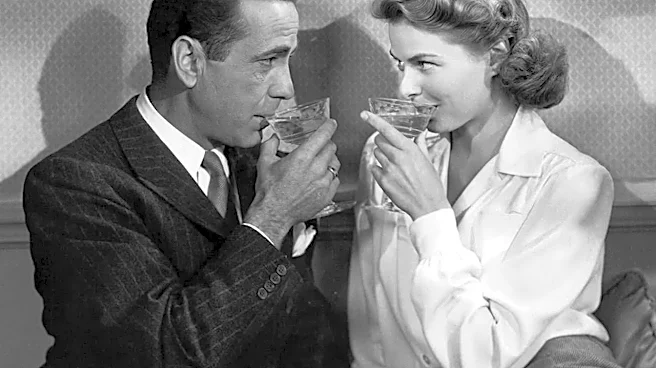
The most legendary part of the film's chaotic creation was its undecided ending. Because the script was being written as filming progressed, not even the actors knew who Ilsa Lund would end up with. Ingrid Bergman famously complained that she didn't know whether to play her scenes with affection toward Rick (Humphrey Bogart) or her husband, Victor Laszlo (Paul Henreid). The writers experimented with various conclusions, but none felt right. The indecision wasn't just a creative quirk; it reflected the film's central moral dilemma. The eventual, iconic ending—where Rick sacrifices his love for a greater cause—was only settled upon toward the end of shooting. This last-minute decision gave the film its powerful, bittersweet conclusion and cemented Rick's transformation from a cynic to a hero.
A World War and a Propaganda Push
The film's development limbo was profoundly shaped by world events. The play was written before America entered World War II, but the movie was produced just after the attack on Pearl Harbor. This transformed the project from a simple melodrama into a piece of patriotic wartime filmmaking. The U.S. government's Office of War Information even reviewed the script to ensure it aligned with the Allied cause. This backdrop gave the studio a powerful incentive to get the film made, turning Rick’s personal story into an allegory for American isolationism giving way to intervention. The film's setting in Casablanca, a real-life exit point for European refugees, added a layer of immediate relevance and urgency that resonated with audiences on a national scale.