






A Pause Button on Open Play
For most of a soccer match, the game flows. Talent, system, and stamina usually dictate which team controls possession and creates chances. But a set piece—a corner, a free kick, or even a long throw-in—hits the pause button on that flow. It stops the game and creates a manufactured
scoring opportunity that is less about technical superiority and more about organization and nerve. In tight tournament games where defenses are compact and risk-averse, breaking a team down in open play can feel impossible. Data from recent World Cups has shown that set-piece goals can account for a significantly higher percentage of total goals than in league play, sometimes as high as 35-40%. They are often called the "great equalizer" because they give an underdog a puncher's chance against a more talented opponent. For a few seconds, it doesn't matter who has the better players; it only matters who can execute a single, high-stakes play.
The Game Within the Game
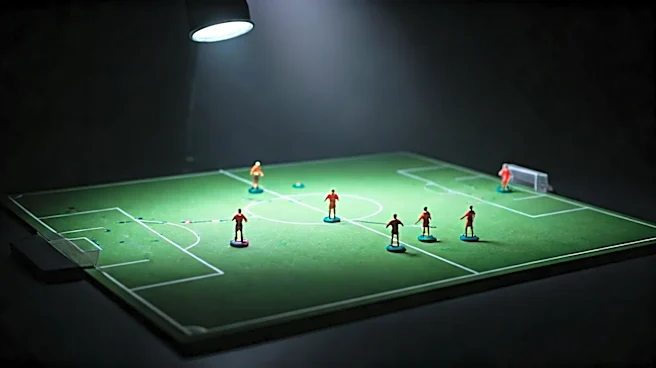
A set piece isn't just a hopeful ball into the box; it's a highly choreographed play, a game-within-a-game where specialists thrive. Teams now dedicate immense amounts of time and specific coaching resources to perfecting these routines. On the attacking side, you have the delivery specialist, the player with the unique ability to whip a ball into a precise area with pace and curve. Then you have the targets: the tall players who are good in the air, and the clever players who make decoy runs to create space for others. Defenses, meanwhile, drill their responses relentlessly, deciding between man-marking, zonal marking, or a hybrid system to counter the threat. This tactical battle—attackers using screens and blockers versus defenders trying to hold their line—turns the penalty box into a momentary chess match. The level of detail is staggering, and in a tight game, the team with the superior set-piece strategy often gains the decisive edge.
Orchestrated and Unpredictable Chaos
While set plays are meticulously planned, their true danger lies in the chaos they are designed to create. Unlike a smooth passing move, a corner kick or a deep free kick introduces a level of unpredictability that is terrifying for a defending team. The goal is to deliver a ball into a crowded area where anything can happen—a deflection, a miscued clearance, a lucky bounce. It’s about creating a scenario where the second or third ball becomes just as dangerous as the initial header. The sheer number of bodies in a small space, the flight of the ball, and the desperation of both teams create a volatile mix. For 90 minutes, defenders are trained to keep play in front of them and control the space. A set piece forces them into a reactive, scrambling posture, where a single mistake or moment of bad luck can undo an entire game's worth of solid work. This injection of pure chance is a huge part of what makes it feel so perilous.
A Pure Test of Nerves
Ultimately, the danger of a set piece is psychological. For the attacking team, it’s a moment of collective hope. It’s a chance to reset, take a deep breath, and execute a play they've practiced hundreds of time. It's an opportunity, not a threat. For the defending team, it is a test of pure concentration under the most intense pressure. After an entire match of physical and mental exertion, players must suddenly perform a highly specific defensive task where a single lapse can lead to elimination. The fear of being the player who loses their marker or makes the fatal error is immense. This mental fatigue is what attacking teams prey on. The repeated pressure of defending multiple set pieces can wear a team down, creating stress and forcing mistakes. The heightened focus required, combined with the catastrophic consequences of failure, is what makes every fan's heart jump into their throat.