





1. Offside
This is the big one. The term you will hear more than any other, often followed by groans or cheers. In simple terms, a player is 'offside' if they are nearer to the opponent's goal line than both the ball and the second-to-last opponent when the ball is played
to them. Think of it as the 'no cherry-picking' rule. An attacking player can't just hang out by the goalie waiting for a long pass. It’s called constantly because it’s a foundational rule that governs every single attacking play, and its interpretation is often a matter of inches, leading to endless debate and slow-motion replays.
2. VAR (Video Assistant Referee)
If you started watching soccer in the last few years, you might think VAR is the name of a player. It stands for Video Assistant Referee, and it’s the sport’s version of instant replay. You’ll hear this term anytime there's a controversial or critical moment: a potential goal, a penalty kick decision, a direct red card, or a case of mistaken identity. The on-field referee will be told to check with the VAR, leading to a dramatic pause in the game where everyone stares at the stadium screen. Love it or hate it, VAR is a massive part of modern soccer commentary and controversy.
3. Set Piece
This isn't one specific action but a category of plays that you'll hear referenced constantly as a team's best chance to score. A 'set piece' is any situation where the ball is returned to play from a dead-ball situation. This includes corner kicks (when the defending team kicks the ball out over their own goal line), free kicks (awarded after a foul), and penalty kicks. Commentators talk about set pieces so much because they are golden scoring opportunities where teams can use pre-planned, rehearsed plays, turning a moment of chaos into a structured attack.
4. Stoppage Time (or Injury Time)
Unlike American football or basketball, the clock in a soccer match never stops. It runs continuously for two 45-minute halves. So what happens when the ball goes out of play, a player gets injured, or there's a long VAR delay? The referee adds that lost time onto the end of the half. This is 'stoppage time.' You'll hear announcers speculate about it all through the end of a half. When the clock hits 45:00 or 90:00, the game isn't over. A board is held up showing the minimum number of extra minutes, and the most dramatic moments often happen in this period.
5. Yellow Card / Red Card
This is soccer's simple but brutal disciplinary system. A yellow card is a formal warning for unsporting behavior, a reckless foul, or dissent. Think of it as a personal foul in basketball—you can only get so many. If a player gets a second yellow card in the same game, it results in an automatic red card. A red card means immediate ejection from the game, and their team must play the rest of the match a man down. A straight red can also be given for a particularly dangerous foul or denying a clear goal-scoring opportunity. It's a game-changer, and the broadcast will always focus on it.
6. Pressing
Once a niche tactical term, 'pressing' is now a staple of TV commentary. This is the defensive strategy of actively trying to win the ball back as soon as you lose it, rather than retreating into a defensive shape. When you see a team's forwards swarm the opponent's defenders deep in their own half, that’s a 'high press.' You'll hear this praised when it works ('The press created a turnover!') and criticized when it fails ('The press was broken, and now they're exposed at the back!'). It’s the key to understanding the defensive work rate of modern teams.
7. The Final Third
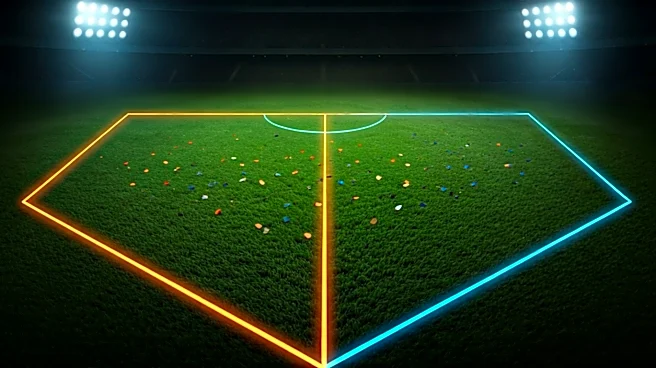
Commentators love to divide the field into three imaginary sections: the defensive third (your own goal area), the middle third, and the 'final third' (the area of the field where you're attacking the opponent's goal). You hear 'final third' constantly because it’s the part of the field where games are won and lost. A team might have great possession in the middle of the park, but announcers will ask, 'What can they do in the final third?' It's shorthand for a team's ability to be creative, clinical, and dangerous when it matters most.