








A Gilded Cage at Warner Bros.
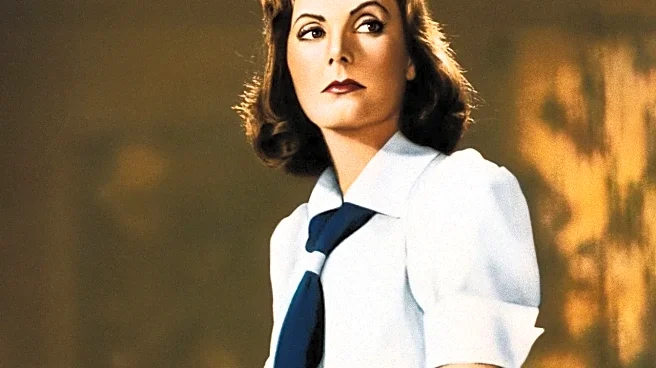
By the early 1930s, Bette Davis was a contract player at Warner Bros., but she was deeply unhappy. Trapped in the rigid Hollywood studio system, she was churning out a series of films she considered mediocre, cast in roles she felt were beneath her talent.
Davis saw herself as a serious actress, but the studio was more interested in molding her into a glamorous, marketable star, often in forgettable pictures. She was a thoroughbred being asked to run in pony races, and her frustration was building. Davis yearned for a complex, challenging role that would allow her to prove her dramatic range—a part with real teeth she could sink into. Little did she know, that role was waiting for her at a rival studio, and getting it would require the fight of her career.
The Unwanted Role That Changed Everything
The film was RKO's 1934 adaptation of W. Somerset Maugham's novel, Of Human Bondage. The role was Mildred Rogers, a cruel, manipulative, and ultimately pathetic Cockney waitress who destroys the life of the man obsessed with her. It was an ugly, unsympathetic part that several major actresses had already turned down, fearing it would damage their careers. But where others saw risk, Davis saw a golden opportunity. Here was the gritty, realistic, and dramatically demanding character she had been dreaming of. She knew instantly that she had to play Mildred. The only problem was her boss, the formidable Jack Warner, who held her contract and had no intention of loaning out his rising star to another studio for a part he considered career suicide.
The Gamble and the Fight for Art
The headline's 'pay cut' is a poetic summary of a much more complex gamble. Davis wasn't just sacrificing money; she was risking her entire career. She relentlessly lobbied Jack Warner for the loan-out, haunting his office daily for months. Warner refused, arguing the unglamorous role would ruin the image he was carefully building for her. Finally, worn down by her persistence and motivated by a potential star trade with RKO, he relented, reportedly telling her, 'Go and hang yourself.' By leaving the protection of her home studio for a risky part everyone else had rejected, Davis was making a bold statement. She was choosing artistic integrity over commercial safety, betting everything on her own talent when her own boss was betting against her. It was a move that could have ended her career before it truly began.
From Starlet to Superstar
Bette Davis's performance as Mildred was a revelation. It was raw, terrifying, and unlike anything Hollywood audiences had seen. She didn’t just play the villain; she inhabited Mildred's cruelty and desperation so completely that critics and moviegoers were stunned. The gamble had paid off spectacularly, catapulting her from a frustrated contract player to a bona fide star. The performance was so powerful that when she was snubbed for a Best Actress nomination at the Academy Awards, the industry erupted in protest. The outcry forced the Academy to allow write-in votes for the first time in its history, a rule change prompted solely by the brilliance of her performance. Though she didn't win that year, the message was clear: Bette Davis had arrived. The so-called 'consolation prize' Oscar she won the following year for Dangerous was widely seen as the Academy making amends.