







Thinking Beyond the Stage
The most iconic VMA performances share a common secret: they refuse to be contained by the physical stage. Instead of treating the performance area as a simple platform, legendary artists and their production designers use the entire arena—and by extension,
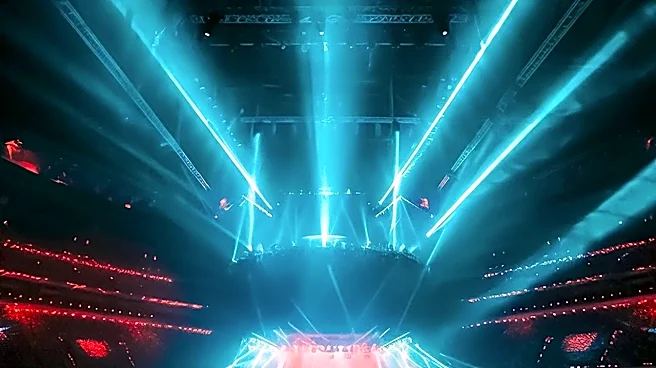
the entire television screen—as their canvas. This isn't just about big sets or pyrotechnics. It’s a conscious decision to create a self-contained world. The production design for the VMAs often involves multiple stages, massive video walls, and complex lighting to create an immersive environment. The goal is to make the audience, both in the venue and at home, feel like they've been transported somewhere entirely new for three to five minutes. This approach turns a musical number into a short film or a piece of theater, making the artist and their message feel monumental.
The Blueprint: Beyoncé’s 2014 Vanguard Medley
Look no further than Beyoncé’s 2014 Michael Jackson Video Vanguard Award performance for a masterclass in environmental scale. For nearly 16 minutes, she didn't just perform on a stage; she performed inside her visual album. The key was a colossal video wall that wasn't just a backdrop but an active participant. It displayed monolithic silhouettes, home videos, and, most famously, the word "FEMINIST" in giant, glowing letters. By interacting with these massive, graphic elements, Beyoncé controlled the entire visual frame. The stage itself was relatively simple, which forced the focus onto her and the enormous statements appearing behind her. This created a sense of scale that felt personal yet overwhelmingly powerful, cementing her status and the performance's legacy.
Theatrical World-Building: Lady Gaga's 'Paparazzi'
If Beyoncé used the screen to project power, Lady Gaga used the entire set to tell a story. Her 2009 performance of "Paparazzi" wasn't just a song; it was a macabre one-act play about the fatal consequences of fame. The set was an ornate, decaying mansion, and Gaga's performance wasn't confined to a single spot. She stumbled across the stage, played a grand piano, and ultimately collapsed as theatrical blood gushed from her torso. The performance ended with her body being lifted and hanging lifelessly in a moment of shocking performance art. By turning the stage into a specific, narrative location and having the action bleed across it, Gaga made the performance feel like an all-consuming event. She transformed the VMA stage from a concert venue into a piece of chilling theater, a choice so impactful it's still discussed as one of the most iconic VMA moments ever.
Elemental Force: Kendrick Lamar's Trial by Fire
Scale can also be achieved through raw, elemental force. Kendrick Lamar's 2017 opening performance of "DNA." and "HUMBLE." transformed the stage into a chaotic spectacle of fire and movement. The production wasn't about intricate props, but about overwhelming the senses. A dancer performed martial arts while completely engulfed in flames, and a wall of fire erupted behind Lamar as he rapped. He and his dancers, styled as ninjas, used a stark, fiery ladder and the entire horizontal space of the stage, creating a feeling of primal energy and danger. This wasn't just a set; it was a hazardous environment. By weaponizing an element like fire and making it a core part of the choreography, Lamar's performance felt less like a rehearsed show and more like an unstoppable force of nature, achieving a different kind of massive impact.