







The Cardigan's Classic Code
Before it became a royal style signature, the cardigan had a long and practical history. Born from military necessity in the mid-19th century, it was designed for the 7th Earl of Cardigan's troops to offer warmth without restricting movement. For decades,
it existed as a sensible, almost academic garment. By the 1950s, it was a symbol of American preppy style, often seen on college campuses and worn by Hollywood stars like Grace Kelly. It was proper, reliable, and a little bit predictable—the kind of thing one wore for respectable comfort, not for making a statement.
A Sporty Disruption
By the 1970s and '80s, the rigid walls between clothing categories began to crumble. The rise of fitness as a lifestyle, championed by icons like Jane Fonda, brought athletic wear out of the gym and onto the street. The term "athleisure" was coined to describe clothes that looked sporty even if the wearer wasn't. This movement challenged the idea that comfort and elegance were mutually exclusive. Suddenly, tracksuits, sneakers, and sweatshirts were not just for exercise; they were part of a new, relaxed approach to everyday dressing, creating a cultural backdrop ripe for style experimentation.
Enter Diana, The Sloane Ranger
When Lady Diana Spencer appeared on the public stage in the early 1980s, she was the archetype of the "Sloane Ranger"—a term for a specific tribe of young, upper-class Londoners. The Sloane style was preppy and traditional, built on a uniform of ruffled blouses, long skirts, and, of course, cardigans. But Diana’s genius was in how she subtly bent the rules. She took the classic cardigan and wore it with a new ease, throwing it over casual dresses or pairing it with jeans. She made the quintessential garment of the British upper class feel approachable and modern, hinting at the style icon she would become.
The Pearl Button's Secret Language
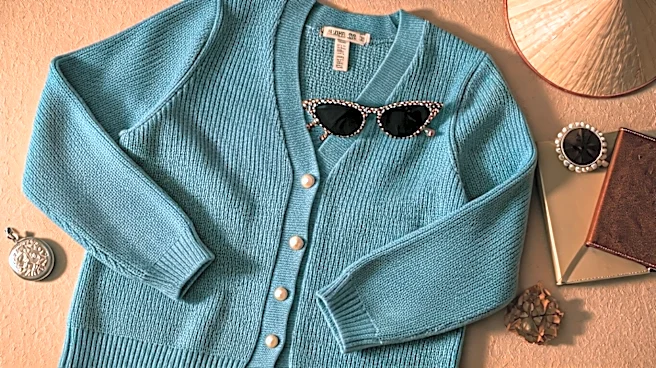
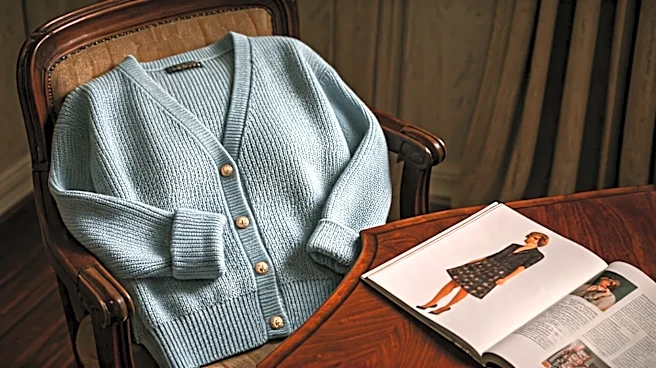
The small detail that elevates this entire story is the pearl button. Pearls have a rich history, symbolizing purity, royalty, and tradition. They are the definition of formal, legacy jewelry. By replacing a standard button with a pearl, the cardigan is instantly transformed. The cozy, practical knit—a piece of sportswear at its core—is suddenly in conversation with the aristocratic pearl. This single design choice creates the sporty-formal tension. It’s a garment that says, “I respect tradition, but on my own terms.” In 1989, Diana was photographed dropping Prince Harry at school wearing a red sweater with pearl embellishments, a perfect example of her blending the formal with the everyday.
A Legacy of High-Low Style
The pearl button cardigan remains a powerful piece because the aesthetic it represents is now fundamental to how we dress. The idea of mixing high and low—pairing a designer blazer with vintage jeans, or a formal skirt with a simple t-shirt—is a direct descendant of the style Diana helped popularize. She mastered the art of using clothes to communicate a complex personality: a royal who was also a mother doing the school run, an aristocrat with a modern, approachable sensibility. The cardigan wasn't just a sweater; it was a symbol of her unique ability to bridge worlds, making her a style icon whose influence has only grown stronger with time.