





Myth: A Possession Should End in a Shot
In basketball, a possession is a discrete, quantifiable event. It begins when you get the ball and ends with a shot attempt, a trip to the foul line, or a turnover. The goal of every possession is, fundamentally, to score. Efficiency is measured in points
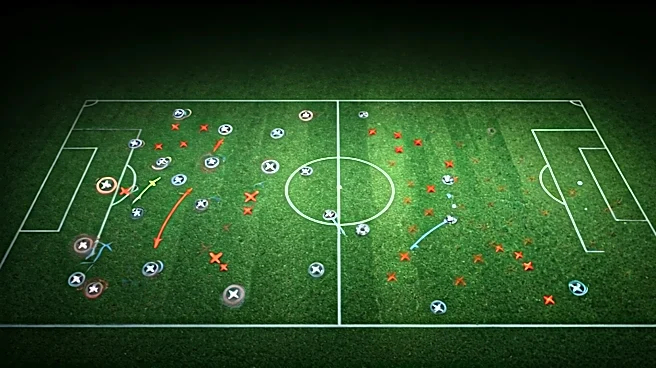
per possession. This is the lens through which many American sports fans view all games. But in soccer, this framework collapses. A “possession” isn’t a single trip down the court; it’s a fluid state of control. The primary goal of having the ball is often not to immediately create a shot, but to manipulate the opponent’s defensive shape. Think of it like a boxer’s jab. Most jabs don’t knock the opponent out, but they set up the eventual power punch. A long spell of soccer possession, with passes moving from side to side, is like a series of jabs. The team is forcing the 11 defenders to shift, run, and chase, hoping to create a small gap, a moment of fatigue, or a mental lapse that can be exploited for a decisive through-ball. The possession itself is the weapon, not just the prelude to one.
Myth: Passing Backwards Is Pointless and 'Negative'
To an eye trained on the 24-second shot clock, a defender passing the ball back to their own goalkeeper is an act of pure heresy. It feels like a retreat, a failure. In basketball terms, it’s like your point guard getting to the three-point line and then turning around to hand the ball back to the guy inbounding. Why would you ever do that?
Because in soccer, you’re not just playing against the opponent; you’re playing against space. Passing the ball backwards is soccer’s version of a strategic reset. It’s the equivalent of a point guard dribbling at the top of the key, realizing the play has broken down, and calling for a screen to start over. By recycling possession to the back, a team draws the opponent forward, creating acres of new space behind the pressing players. It’s a pressure release valve that allows the team to switch the point of attack to a weaker, less populated side of the field. It’s not negative play; it’s a sign of a team’s patience and tactical intelligence, choosing a high-percentage reset over a low-percentage forward pass into traffic.
Myth: High Possession Stats Are Meaningless
This is the classic complaint, often summarized as, “Spain had 75% possession and lost 1-0.” It’s true that possession doesn’t guarantee victory. But to dismiss it is like saying a basketball team’s high field goal percentage is meaningless because they lost on a buzzer-beater. Possession is a tool, and its effectiveness depends on how it's used.
There are multiple reasons to dominate the ball. Defensively, if you have the ball, the other team can’t score. It’s the ultimate form of defense. Physically, it forces the opponent to do far more running, chasing shadows and tiring themselves out for the crucial final 20 minutes of the match. And tactically, as mentioned before, it’s about probing for weakness. Sometimes a team with low possession wins because they are ruthlessly efficient on the counter-attack, just as a basketball team can win by generating turnovers and scoring in transition despite being out-shot. But over the long haul of a league season, the teams that control the ball and dictate the tempo are the ones that consistently win.
Myth: Turnovers Aren't As Punishing
In basketball, a live-ball turnover is a killer, often leading to an easy fast-break layup. A soccer turnover might seem less dramatic—the ball is 50 yards from goal, so what’s the big deal? This misses the geographic importance of a soccer turnover. Losing the ball in your own defensive third is a five-alarm fire, equivalent to your point guard getting stripped at half-court. It leads to a high-quality scoring chance for the opponent against a defense that isn’t set.
This is why modern soccer tactics are obsessed with the “counter-press” or “gegenpressing.” The idea is that the most dangerous time to attack is the 5-10 seconds right after the opponent wins the ball, because they are disorganized and transitioning from defense to offense. Therefore, when a team loses possession, they immediately swarm the ball to win it back in a dangerous area. For a possession-based team, a turnover isn’t just a missed opportunity; it’s a trigger for the most chaotic and dangerous phase of the game.