



The Beauty of the Lived-In World
So much of modern cinema feels sterile, with perfectly clean apartments and impossibly tidy workspaces. Gerwig’s films reject this entirely. Her worlds are not just sets; they are lovingly cluttered, lived-in spaces that feel authentic and personal. Think
of Lady Bird’s bedroom, with its walls covered in posters and personal trinkets, or the March sisters' attic in Little Women, a creative haven overflowing with books, costumes, and dreams. This approach, often shooting in practical locations rather than on soundstages, gives her films a tangible reality. Cinematographer Sam Levy, who worked on Lady Bird, noted that finding locations with the right “bones” was paramount to capturing the family’s socioeconomic status and emotional life. This intentional messiness isn’t just for show; it grounds the characters and their emotional journeys in a world that feels as real and imperfect as they are.
Color as an Emotional Compass
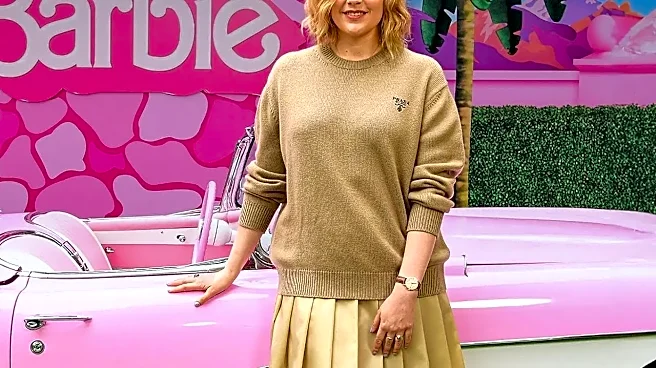
In Gerwig’s hands, color is a powerful storytelling tool. Her palettes are never accidental; they are a direct line to the characters' internal states. In Lady Bird, the visuals were developed to look like a “memory,” with a hazy, golden glow suffusing Sacramento, representing a nostalgia for a place the main character is desperate to escape. For Little Women, Gerwig used a distinct dual-color scheme to guide the audience through its non-linear timeline. The past is drenched in warm, golden hues, symbolizing the joy and unity of childhood, while the present is cast in cooler, more somber blues and grays, reflecting the harsher realities of adulthood. The sisters even had their own assigned colors—Jo in fiery red, Amy in light blue—to subtly define their personalities. And of course, Barbie turned this up to eleven, using a vibrant, saturated pink not just as a design choice, but as a bold statement on femininity, artificiality, and joy.
Choreographed Chaos and Stillness
Gerwig's characters are often bursting with a restless energy, and her direction reflects that. Dialogue frequently overlaps, with characters talking over one another in a way that feels natural and true to life, a technique she honed from her roots in the “mumblecore” film scene. Her scenes are often full of movement, with characters tumbling and embracing in a kind of choreographed chaos that visualizes their deep, often messy connections. Yet, she also understands the power of stillness. For Lady Bird, she and cinematographer Sam Levy made a conscious choice to limit camera movement, saving it for moments of emotional significance. Most of the film was shot on a dolly, giving it a smooth, observant quality. This forces the audience to lean in and focus on the performances and the tension built through dialogue alone, like in the many scenes between Lady Bird and her mother in the car.
The Gerwig Effect
So, is this visual language truly being “imitated for generations”? While it may be too soon to measure its full historical impact, Gerwig's influence on the current generation of creators is undeniable. Following the massive success of Barbie, the “Barbiecore” aesthetic exploded across social media, influencing fashion, interior design, and countless TikTok trends. More importantly, her success has proven that films centered on women's stories, told with a distinctly female perspective, are not a niche market but a universal one. Her ability to blend artistic vision with commercial success has opened doors and inspired a new wave of female filmmakers who see in her a model for telling their own stories without compromise. Her approach, which treats the emotional lives of women with the seriousness and artistry they deserve, is creating a new blueprint for storytellers.