


The Unforgiving Honesty of Daylight
Natural daylight is the gold standard for makeup application for one simple reason: it is brutally honest. Containing the full spectrum of color, sunlight reveals everything with unflinching accuracy. It shows your foundation's true shade, but it also
highlights every blending line, every bit of dry skin, and every layer of product sitting on top of your face. Heavy, full-coverage foundations and thick powders, which aim to create a uniform surface, often look most artificial in daylight. Their dense textures absorb or reflect light in a way that’s different from natural skin, creating a visible mask that screams “makeup” rather than “great skin.” Any chalkiness or patchiness becomes immediately obvious, a problem often created by applying makeup under forgiving indoor lights and then stepping outside.
The Deception of Evening Light
Evening light is a different beast entirely. Whether it's the warm, yellow-toned glow of an incandescent bulb in a restaurant or the moody, directional lighting of a bar, artificial light is softer and less complete than daylight. This is where heavy makeup gets its reputation for being glamorous. Dim, warm light is incredibly forgiving; it blurs imperfections and softens features. Because this type of lighting can make skin appear more golden or orange, it can sometimes tempt people to over-apply foundation to compensate. It’s also why a bold eye or lip feels appropriate—subtlety gets lost in the shadows. However, this flattering effect has limits. While it works for a controlled environment like a photo shoot with a ring light designed to soften texture, it can backfire in a dynamic social setting where light changes as you move.
When Texture Fights the Light
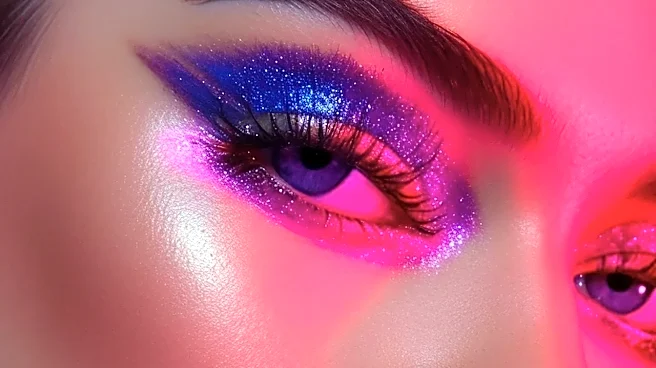
The core of the issue is a battle between product texture and light physics. Makeup products interact with light in three ways: absorption, reflection, and diffusion. Heavy, matte foundations are designed to absorb light, which minimizes shine but can also erase the natural dimension of your face, making it look flat or mask-like under the wrong conditions. In dim lighting, an overly matte face can look dull and lifeless. Conversely, products with too much shimmer or glitter—popular for evening looks—can create harsh, unflattering reflections under direct artificial light or camera flash, highlighting texture you'd rather hide. This is the science behind “flashback,” where under-eye concealer appears ghostly white in photos because ingredients like silica or titanium dioxide bounce the intense light from a flash directly back at the camera lens.
A Modern Approach: Working With Light, Not Against It
The secret to beautiful evening makeup isn’t about piling on more product; it’s about strategic application and choosing the right textures. Instead of a single heavy layer of foundation, makeup artists often build coverage in thin layers only where needed, a technique that maintains skin’s natural dimension. The goal is to create a perfected canvas, not an opaque one. Choosing satin or “light-reflecting” finishes can be a game-changer. These formulas don’t just sparkle; they contain micro-particles that diffuse light gently, creating a soft-focus effect that blurs imperfections without looking greasy or overly shimmery. This mimics the luminosity of healthy skin. For evening, this means you can still have polished, long-wearing makeup, but it will look like beautiful skin under any light source—from candlelight to a smartphone flash. It’s about enhancing, not hiding.