



The Language of Nature
At the heart of van Herpen’s work is biomorphism, an artistic approach that models design on the patterns and shapes found in the natural world. While the term has roots in 20th-century art, van Herpen has made it her signature in 21st-century fashion.
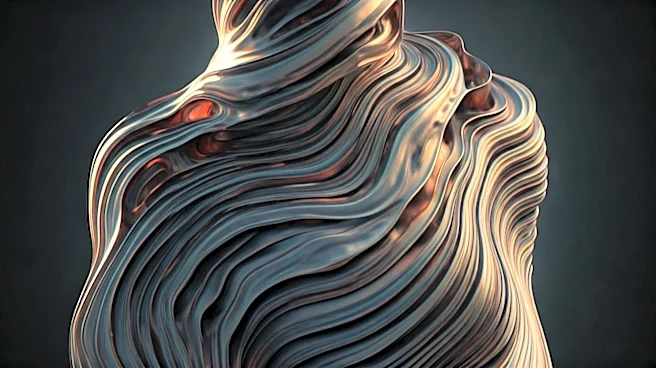
Her collections draw inspiration from the unseen and microscopic, evoking everything from the branching networks of fungi and the intricate patterns of coral reefs to the fluid dynamics of water and smoke. Her work is less about simply copying a flower onto a dress and more about capturing the very forces that create the flower. It’s a philosophy that treats nature not as a static image to be printed, but as a process to be emulated.
A High-Tech Atelier
To bring these organic visions to life, van Herpen famously bypasses many traditional tools of the trade. Her atelier is a laboratory where fashion, science, and technology intersect. She was one of the very first designers to incorporate 3D printing into haute couture, debuting a piece in her 2010 "Crystallization" collection that signaled a seismic shift in the industry. Since then, she has relentlessly pushed the boundaries of what is possible, using techniques like laser cutting, digital modeling, and injection molding. In collaboration with architects, scientists, and engineers, she develops new materials and methods, such as a "Biophilic" technique involving injecting marble-textured silicone into fine, architecturally designed molds to create forms that appear both fluid and fossilized. These technologies are not gimmicks; they are essential tools for creating the complex, nature-inspired structures that a needle and thread alone could never achieve.
Redefining 'Handmade' Couture
For centuries, haute couture has been defined by its dedication to painstaking hand-craftsmanship—thousands of hours of beading, embroidery, and hand-stitching. Van Herpen doesn’t reject this legacy, but she radically expands upon it. She proves that craftsmanship can also mean 260 hours of continuous 3D printing to create a single garment, or meticulously hand-inlaying abalone shell flakes into liquid silicone before it sets. In her hands, the digital becomes artisanal. By fusing technological precision with the delicate touch of an artist, she has reframed couture for the modern age. Her work argues that the value of a garment lies in the vision and innovation behind it, whether the process involves a human hand guiding a needle or a computer guiding a laser.
Sculptures in Motion
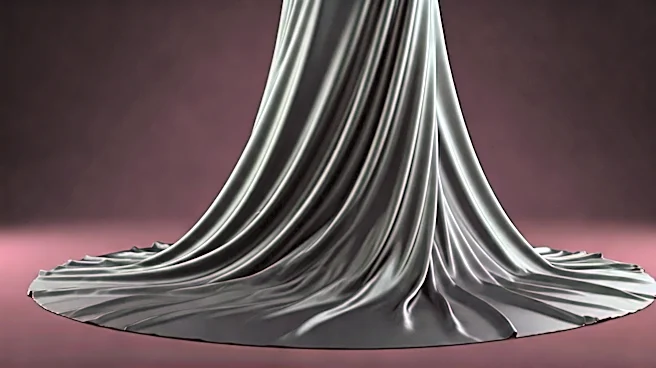
Ultimately, the power of an Iris van Herpen creation is in its movement. Influenced by her early training in classical ballet, her designs are not static sculptures but dynamic extensions of the body. They ripple, undulate, and transform with every step, creating an otherworldly effect that has made her work a favorite of boundary-pushing artists like Björk and a staple in museum exhibitions worldwide. Garments from collections like "Hypnosis" appear to move like liquid, while others seem to breathe and branch out like living organisms. This kinetic quality is what truly sets her apart. She doesn't just dress the body; she transforms it into a moving piece of art, a living structure where the lines between the natural, the human, and the technological completely dissolve.