



A Test of Nerve, Not a Game of Soccer
Let’s be clear about what a penalty shootout is. It is not soccer. For 120 minutes, two teams compete in a fluid, dynamic contest of strategy, teamwork, and endurance. Then, the whistle blows, and the sport changes entirely. The game is reduced to a static
set piece: one man, one ball, one goalkeeper, twelve yards of green grass. The preceding two hours of play—the tactical masterclass, the defensive heroics, the near-misses—are suddenly irrelevant. The outcome is divorced from the team-based play that defines the sport. It becomes a series of individual psychological battles, something closer to a skills competition at an all-star game than a fitting conclusion to a month-long tournament. The team that was demonstrably better for two hours can lose because of a format that no longer resembles the game they were playing.
The Psychology of 12 Yards
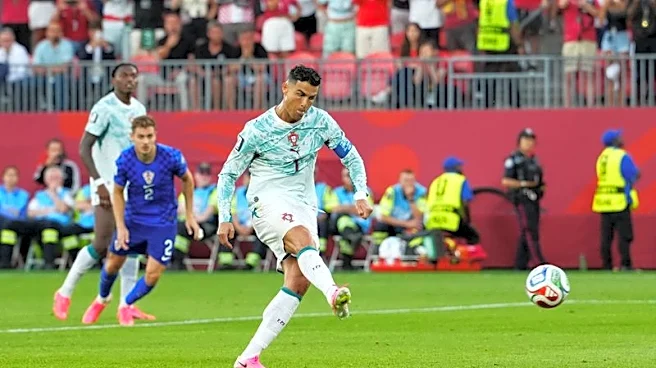
The walk from the center circle to the penalty spot is often called the loneliest walk in sports, and for good reason. During this walk, the player's brain can turn against them. A skill that is normally automatic, honed by thousands of hours of practice, becomes a conscious, clumsy effort. Research shows that players' success rates with penalties drop significantly in shootouts compared to during regular play, a direct result of the immense psychological pressure. Fear of losing often outweighs the hope of winning. The goalkeeper, by contrast, is in a state of low expectation; every save is a bonus. For the kicker, missing can define a career. The most famous image from the 1994 World Cup final isn’t of Brazil celebrating, but of Italy’s Roberto Baggio, who had carried his team to the final, standing with his hands on his hips after his penalty sailed over the bar. That single, brutal moment has haunted him for decades, a punishment that far outweighs any sporting crime.
Rewriting the Story With a Coin Flip
Every great sporting event tells a story. It has a beginning (the group stage), a middle (the knockout rounds), and an end (the final). The penalty shootout is a terrible storyteller. It often feels like a random, arbitrary ending tacked onto an epic narrative. Imagine reading a brilliant novel only for the last page to be decided by a coin flip. That's the feeling of a final decided on penalties. The result can feel unearned, unjust, and deeply unsatisfying. It’s a mechanism born of logistical necessity—broadcast schedules and stadium availability don’t allow for endless replays like in the old days. But in solving a practical problem, it created a narrative one. It allows a team that has played defensively, perhaps “playing for penalties,” to steal a victory they never truly chased during the flow of the game. It’s an ending that delivers drama, certainly, but it’s the chaotic drama of a lottery, not the earned drama of a sporting contest.
Is There A Better Way?
For years, fans and even FIFA officials have questioned the shootout's cruelty and searched for alternatives. Proposals have ranged from the practical to the bizarre. The old North American Soccer League used a 'hockey-style' shootout where a player would dribble from 35 yards out with five seconds to score. Another idea, the “Attacker Defender Goalkeeper” (ADG) system, gives an attacker 30 seconds to score against a defender and a goalie. Some have suggested progressively removing players during extra time to open up space and encourage a decisive goal, similar to 3-on-3 overtime in hockey. The problem is that none of these have gained universal traction. Replays are a logistical nightmare, and other ideas are seen as too radical a departure from the game's tradition. So, for now, we are stuck with the shootout, a flawed, brutal, but undeniably compelling piece of sporting theater.