






The Compressed Battlefield
In both soccer and American football, the field shrinks dramatically in these key moments. During a corner kick, 20 players cram into the penalty box, an area roughly 44 yards wide by 18 yards deep. Suddenly, the vast green expanse of the pitch becomes
a claustrophobic thicket of bodies. Similarly, once an NFL team enters the “red zone”—the final 20 yards of the field—the defense no longer has to worry about the deep threat. Safeties creep toward the line of scrimmage, linebackers clog passing lanes, and the entire field of play condenses vertically. In both sports, this compression changes the geometry of the game. Brute force and raw speed become less important than precision, timing, and finding a sliver of daylight in a crowded room. Every inch is contested, and a single misstep by a defender or a perfectly executed move by an attacker can be the difference between success and failure.
The Playbook on Display
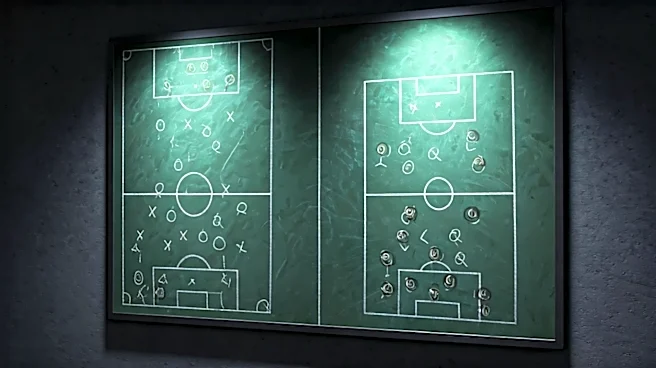
This is where the “installation” truly begins. In football, “install” is the term coaches use for teaching the playbook. During training camp, an offensive coordinator doesn't just hand players a binder; they install plays day by day. The red-zone package is a crucial part of this. It’s a curated menu of plays—screens, pick routes, slants, and fades—designed specifically for that compressed space. Each play has a name, a set of rules, and a series of reads for the quarterback. Soccer has evolved in exactly the same direction. What used to be a hopeful lump of the ball into the box is now a highly choreographed routine. Teams have dozens of named set-piece plays. There are corners aimed at the near post for a flick-on, routines that use blockers to free up a specific shooter (much like a basketball screen), and short-corner options designed to pull the defense out of its shape. This isn’t improvisation; it's the execution of a pre-scouted, heavily drilled plan.
Specialists for the Moment
As the strategic importance of these situations has grown, so has the demand for specialists. In the NFL, you have the archetypal red-zone threat: the towering tight end like Travis Kelce or the big-bodied receiver who can win a jump ball. These players might not be the fastest on the team, but their specific skill set—strong hands, a wide catch radius, and the ability to use their body to shield defenders—is invaluable inside the 20. Their entire role on certain downs is to execute a handful of specialized routes to perfection. Soccer is now mirroring this. The rise of the dedicated “set-piece coach” is one of the biggest tactical trends of the last decade. These coaches do nothing but analyze opponents’ defensive structures, design new attacking routines, and drill them relentlessly. On the field, you have designated takers with world-class delivery and specific players whose primary job on a corner is not to score, but to act as a blocker or a decoy to create space for someone else. It's role-playing at its most granular level.
Repetition Breeds Instinct
The final, and perhaps most crucial, parallel is the mind-numbing repetition required. A football team will walk through its red-zone plays hundreds of times. The quarterback and receivers drill their timing until the throw is released before the receiver even makes his break. It has to be automatic, an instinct honed on the practice field so it can be deployed under the immense pressure of a live game. This is the essence of installation: building a foundation so solid that players don’t have to think, they just react. Likewise, modern soccer teams spend a significant portion of their training week on set-pieces. Attackers practice their runs, blockers perfect their timing, and the kicker works on hitting a specific zone no bigger than a hula hoop from 40 yards away. When you see a clever corner-kick goal, you’re not witnessing a moment of spontaneous genius. You’re watching the result of countless hours of tedious, detail-oriented work paying off in a single, explosive instant.